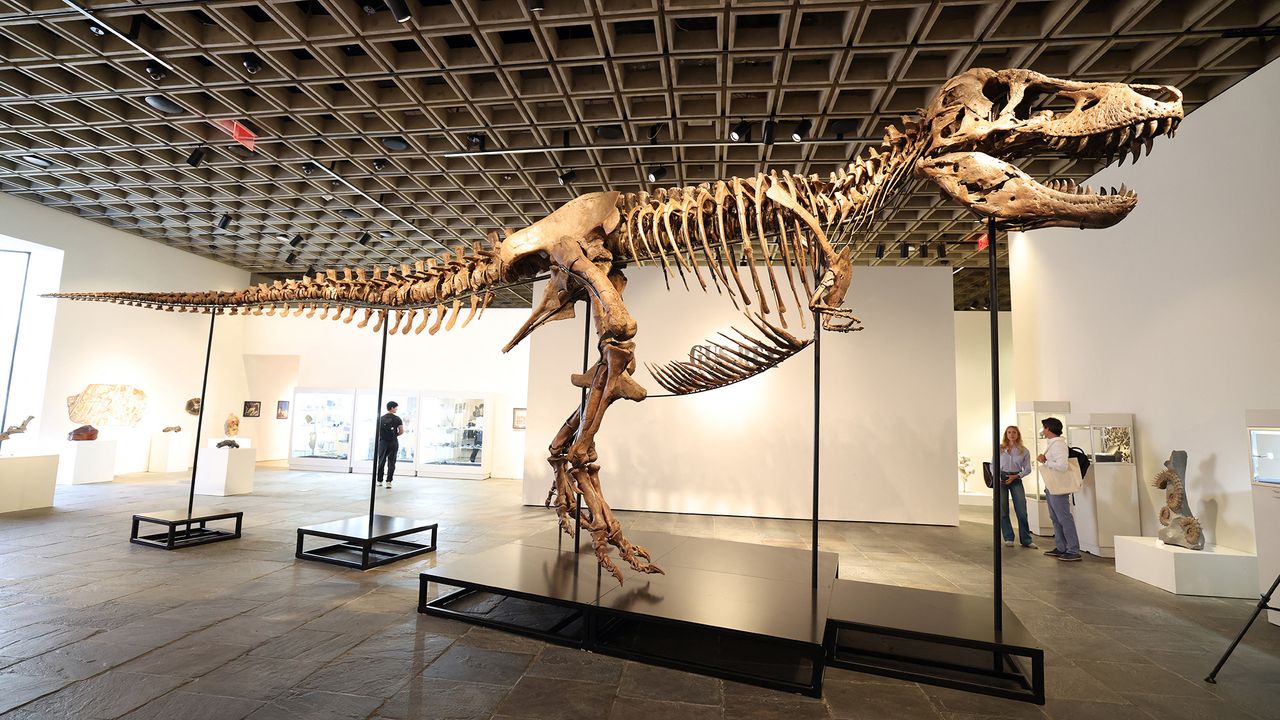
A nearly complete Tyrannosaurus rex skeleton nicknamed Gus sold for $50 million at auction this week, marking one of the highest prices ever paid for a dinosaur fossil. The specimen, discovered in South Dakota, represents a significant loss to paleontological research because its new owner has not committed to making it available for scientific study.
The sale highlights a growing trend in which wealthy collectors and investors treat dinosaur fossils as luxury assets rather than scientific resources. Gus joins other major specimens that have entered private hands, including Stan the T. rex, which sold for $31.8 million in 2020, and the famous Lucy skeleton (a human ancestor), which sold for $27 million in 2021.
Paleontologists express concern about this market trend. When fossils become private property, researchers lose access to specimens that could answer fundamental questions about dinosaur biology, behavior, and evolution. Complete skeletons like Gus are particularly valuable to science because they allow researchers to study proportions, growth patterns, and anatomical relationships that fragmentary fossils cannot reveal.
The South Dakota-found Gus specimen measures roughly 40 feet long and shows minimal preparation damage, according to reports. Such well-preserved examples remain rare in the fossil record, making each loss to private collectors a blow to paleontology's collective knowledge base.
The auction market for dinosaurs has accelerated over the past decade as wealthy individuals view fossils as alternative investments. This commercialization creates a direct conflict with scientific interests. Museum budgets rarely compete with private bidders willing to spend tens of millions of dollars.
Some paleontologists have advocated for legislation requiring privately held significant fossils to be loaned to institutions for study, though such protections remain limited in most jurisdictions. The sale of Gus demonstrates how market forces can remove irreplaceable scientific data from public access indefinitely.