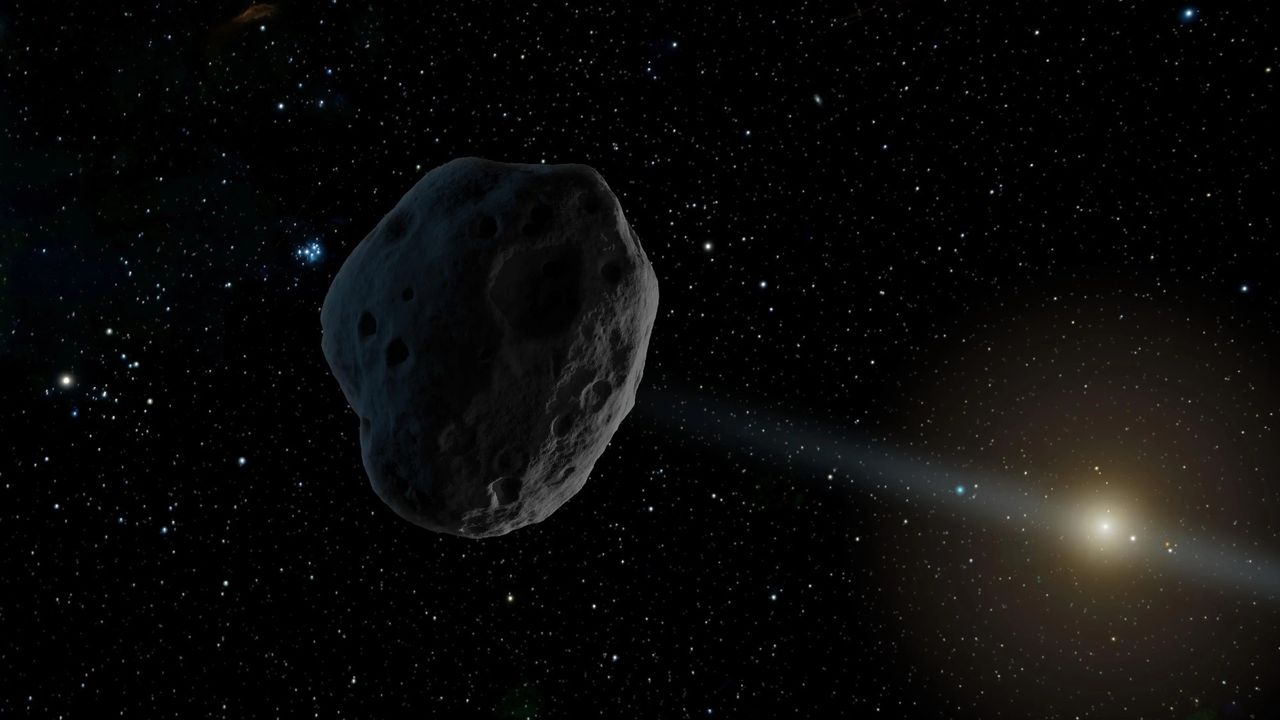
NASA astronomers have reclassified a near-Earth object tracked for nearly 30 years, determining that what scientists believed was an asteroid is actually a comet. The discovery opens new pathways for identifying additional hidden comets lurking in Earth's vicinity and refines strategies for planetary defense against potential impacts.
The object, which has orbited near Earth for decades without detection of its true nature, shows characteristics typical of comets, including outgassing and a tenuous atmosphere. This reclassification emerged from detailed observational analysis that revealed activity patterns inconsistent with inert asteroid behavior. The finding represents a significant oversight in cataloging near-Earth objects, which astronomers have prioritized since the 1990s to track potential collision hazards.
Comets differ fundamentally from asteroids in composition and behavior. Comets contain volatile ices that sublimate as they approach the sun, releasing gas and dust that create visible comas and tails. Asteroids, by contrast, consist primarily of rock and metal. This distinction matters for planetary defense because comets follow different orbital mechanics and may approach Earth unexpectedly, making threat assessment more complex.
The discovery suggests that other near-Earth objects classified as asteroids may also be dormant or weakly active comets. Improved detection methods could reveal additional misidentified objects, expanding the inventory of potential hazards astronomers must monitor. This reclassification effort directly supports NASA's Planetary Defense Coordination Office, which coordinates efforts to detect and track hazardous objects.
The implications extend beyond immediate threat assessment. Understanding comet populations near Earth provides insights into solar system formation and evolution. It also informs strategies for future missions designed to deflect or disrupt dangerous objects before they threaten populated areas.
The research demonstrates that continuous refinement of observational techniques and historical data analysis remains essential for comprehensive planetary defense. As detection capabilities improve, particularly with next-