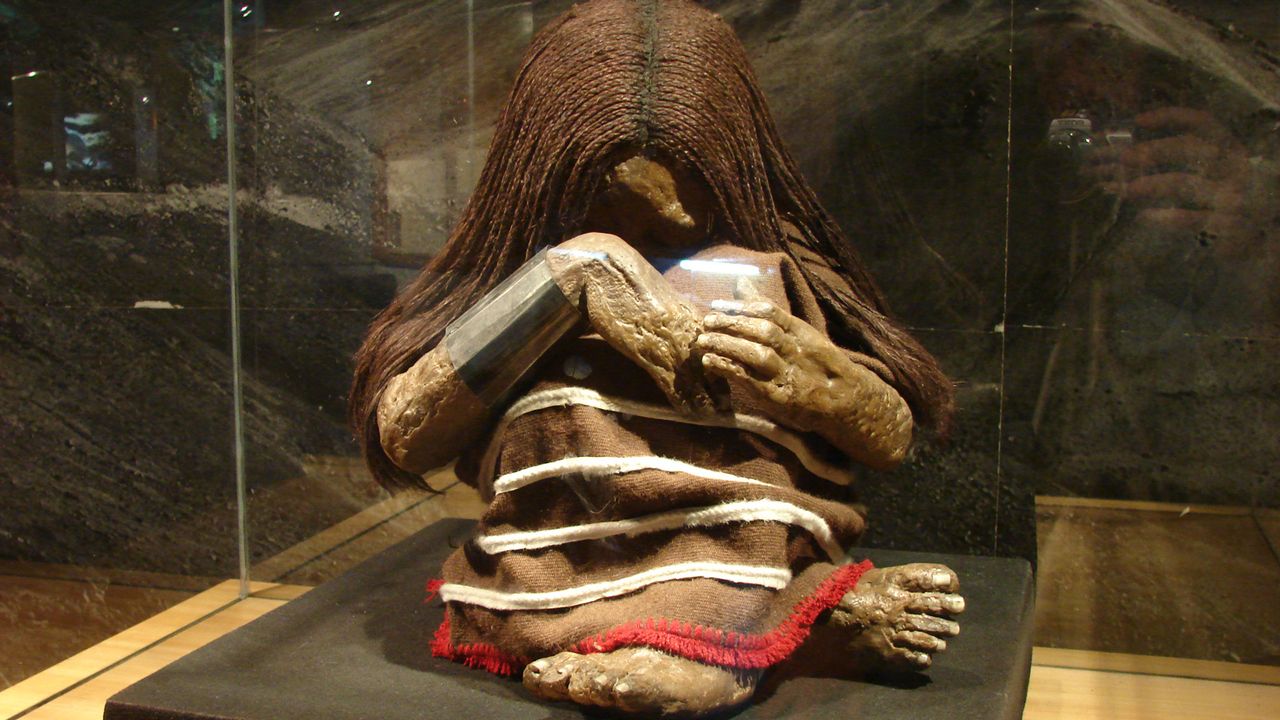
Researchers have reexamined the remains of three children sacrificed during the Inca Capacocha ceremony, finding evidence that contradicts earlier assumptions about how these ritual deaths unfolded. The study reveals new details about the final months and moments of these young victims.
The Capacocha ceremony served as a state ritual in which the Inca sacrificed children at high-altitude mountain sites, often as part of religious observances or to commemorate important events. Previous analysis suggested these children died quickly, possibly through asphyxiation or exposure. The new investigation presents a different picture.
Scientists examined the three mummified remains using advanced techniques including stable isotope analysis, which tracks chemical signatures in bone and tissue to reveal diet and stress patterns. The findings indicate these children underwent significant physical and psychological stress in the months leading to their deaths. Evidence suggests they consumed different foods and experienced nutritional changes before the final sacrifice, pointing to a prolonged preparation period rather than a sudden ritual.
The research team analyzed growth markers and chemical compositions that indicate when nutritional patterns shifted, suggesting the children may have been removed from their communities and subjected to controlled diets as part of ceremonial preparation. This contradicts simpler explanations and reveals the Capacocha ceremony involved complex logistical and ritualistic elements spanning months.
The exact identities of the researchers conducting this study remain unspecified in available reports, as do the specific journal publication details. However, the work contributes to a growing body of evidence using cutting-edge archaeological science to reassess assumptions about pre-Columbian Andean practices.
Understanding Capacocha rituals offers insight into Inca political structures, religious beliefs, and social organization. The ceremony reportedly honored deceased rulers or marked significant state events, making it central to Inca governance. These findings demonstrate that earlier interpretations may have oversimplified what was likely a carefully orchestrated process