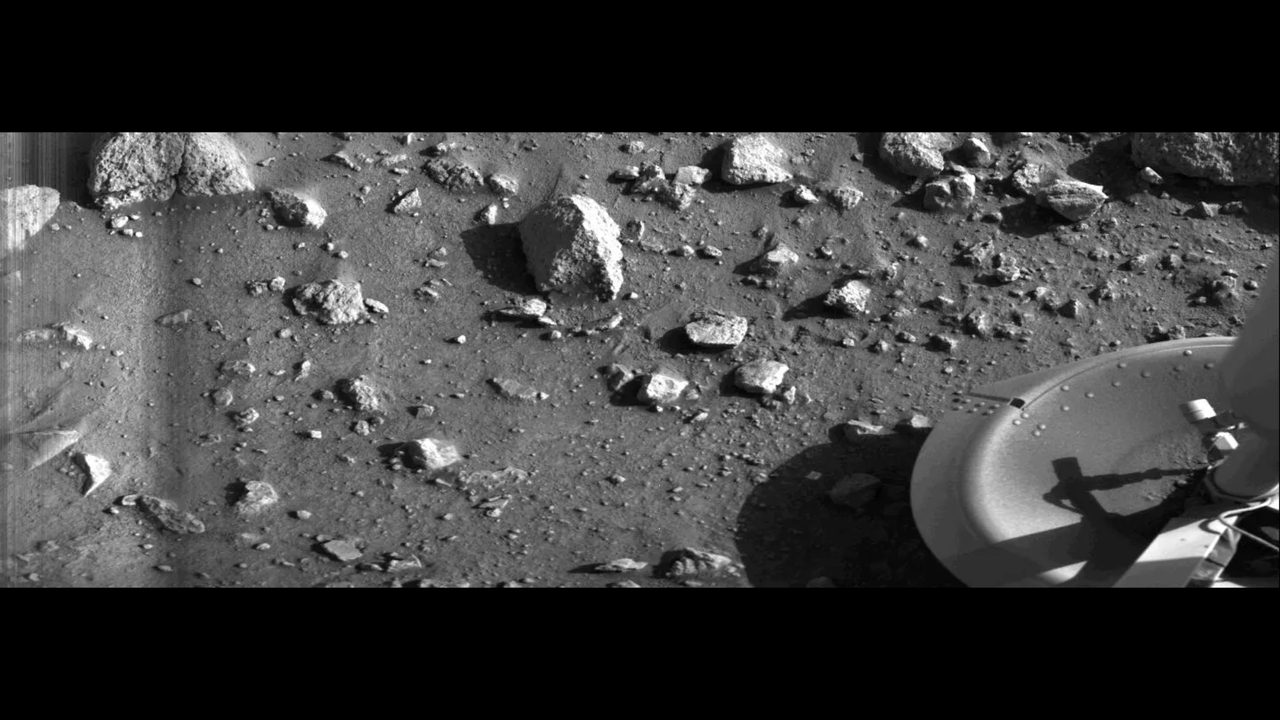
NASA's Perseverance rover transmitted the first photograph ever captured on the Martian surface, marking a watershed moment in planetary exploration. The image, a black-and-white photograph of rocks and dust, arrived from Mars after traveling through space at light speed, yet the technical achievement required years of engineering and planning.
The photograph represents far more than documentation of alien terrain. It confirms that Perseverance successfully landed on Mars and activated its camera systems. The rover, which launched from Earth in 2020, touched down in Jezero Crater in February 2021. Since then, it has systematically explored the ancient riverbed to search for signs of past microbial life.
This first image provided mission controllers at NASA's Jet Propulsion Laboratory in Pasadena, California with critical confirmation that the rover's optical instruments functioned properly after the harsh landing sequence. Perseverance's cameras include several high-resolution systems designed to capture detailed views of rocks, soil composition, and potential biosignatures.
The rover carries advanced analytical tools including a laser spectrometer called PIXL and a ground-penetrating radar called RIMFAX. These instruments work alongside cameras to analyze Martian geology and subsurface features. The photographic capability serves as the eyes enabling scientists to select which rocks warrant closer chemical analysis.
Mars surface imaging has evolved dramatically since the Viking landers first sent pictures in 1976. Modern rover cameras produce sharper, more detailed images than their predecessors, yet the fundamental challenge remains unchanged. Transmitting data across 140 million miles of space demands robust technology and extensive error-correction systems.
The photograph's grainy quality reflects both the conditions on Mars and the limitations of transmitting through solar interference. Future images from Perseverance would grow increasingly detailed as the rover's systems warmed up and operated at full capacity. This first picture served as proof that humanity could