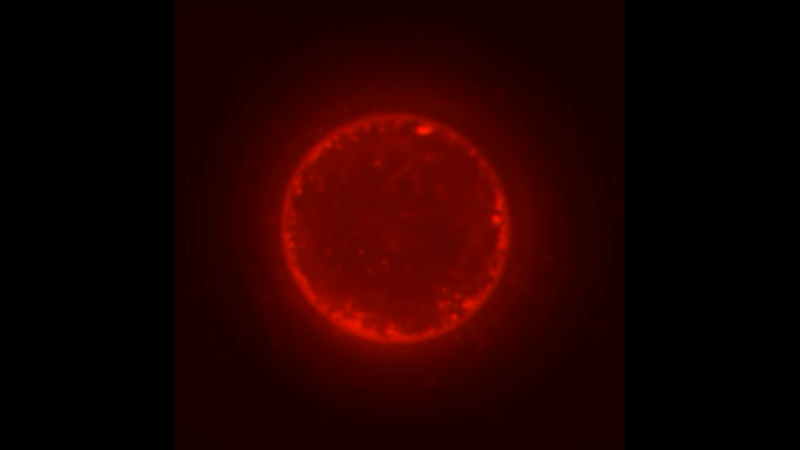
Researchers have created SpudCells, laboratory-synthesized cellular structures that mimic key properties of living cells without being alive. The work represents a step toward understanding how synthetic life might function, according to scientists studying the technology.
SpudCells combine basic cellular components in ways that don't exist in nature. They operate according to engineered rules rather than biological evolution. The structures can perform some functions typical of cells, such as compartmentalization and information processing, but lack the full complexity and autonomy that define living organisms.
The research team designed SpudCells to test fundamental questions about cellular requirements. By stripping away biological complexity, scientists can isolate which features are truly essential for cell-like behavior and which emerge only in evolved systems. This bottom-up approach differs from studying natural cells, where billions of years of evolution created interdependent systems difficult to parse individually.
SpudCells cannot reproduce, metabolize nutrients, or respond to their environment in the way living cells do. They represent a controlled experimental platform rather than a breakthrough in creating artificial life. Researchers built them using lipids, proteins, and genetic material organized in synthetic ways that allow controlled observation of how these components interact.
The work carries implications for biotechnology and pharmaceutical development. Understanding minimal cellular requirements could inform the design of drug delivery systems, biosensors, or cellular factories engineered to produce specific compounds. It also addresses philosophical questions about what distinguishes life from non-life.
Scientists acknowledge significant gaps remain between SpudCells and living systems. Real cells evolved intricate feedback mechanisms, error correction, and adaptive responses that synthetic constructs have not replicated. The lab creations demonstrate principles but not the full suite of capabilities that make life autonomous and self-sustaining.
The research opens pathways for future work in synthetic biology. Researchers can gradually add complexity to these engineered structures, testing each addition's effects on cell-like behavior. This