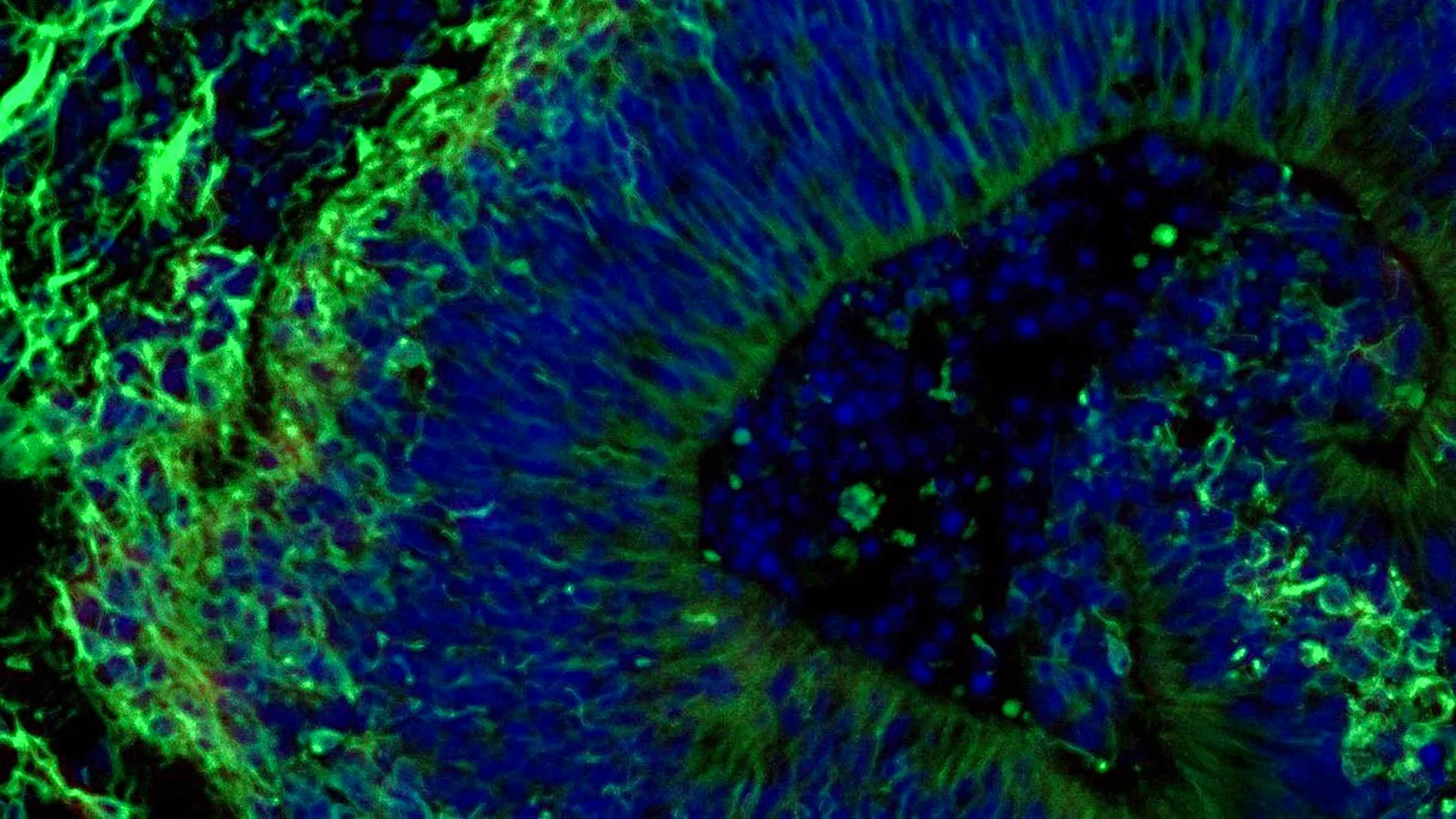
Researchers have grown miniature brain models from patient cells that reveal how different people's tissue responds to Alzheimer's treatments, potentially opening a path to personalized medicine for the disease.
These organoids, tiny three-dimensional structures that mimic brain tissue, showed significant variation in how they responded to an antidepressant when exposed to Alzheimer's-related changes. The organoids also release particles that reflect these differences, suggesting they could serve as biomarkers for predicting treatment success.
The approach addresses a persistent challenge in Alzheimer's research: current treatments help only some patients, and doctors lack reliable ways to predict who will benefit. By using cells from individual patients, organoids could eventually allow clinicians to test multiple drugs on a person's own tissue before prescribing, similar to how cancer researchers use tumor samples to screen therapies.
The miniature brains are grown from induced pluripotent stem cells, which scientists can create from a patient's own blood or skin cells. These cells differentiate into neural tissue that self-organizes into brain-like structures. Because they carry each patient's unique genetic background, they capture individual variations in disease progression and drug response that traditional cell cultures cannot.
The particles the organoids release into their surrounding medium contain proteins and other molecules that reflect the tissue's state. Researchers can analyze these extracellular vesicles as a diagnostic window into brain health without requiring invasive biopsies.
The work remains in early stages. Organoids are simplified models that lack the full complexity of an intact brain, including blood vessels and immune cells that play roles in Alzheimer's. Scaling up this approach to test multiple drugs quickly will require refinement and validation.
Still, the findings suggest organoids could fill a gap between simple lab experiments and clinical trials. They offer a platform to study how genetic differences influence treatment response and to identify which patients might develop side effects