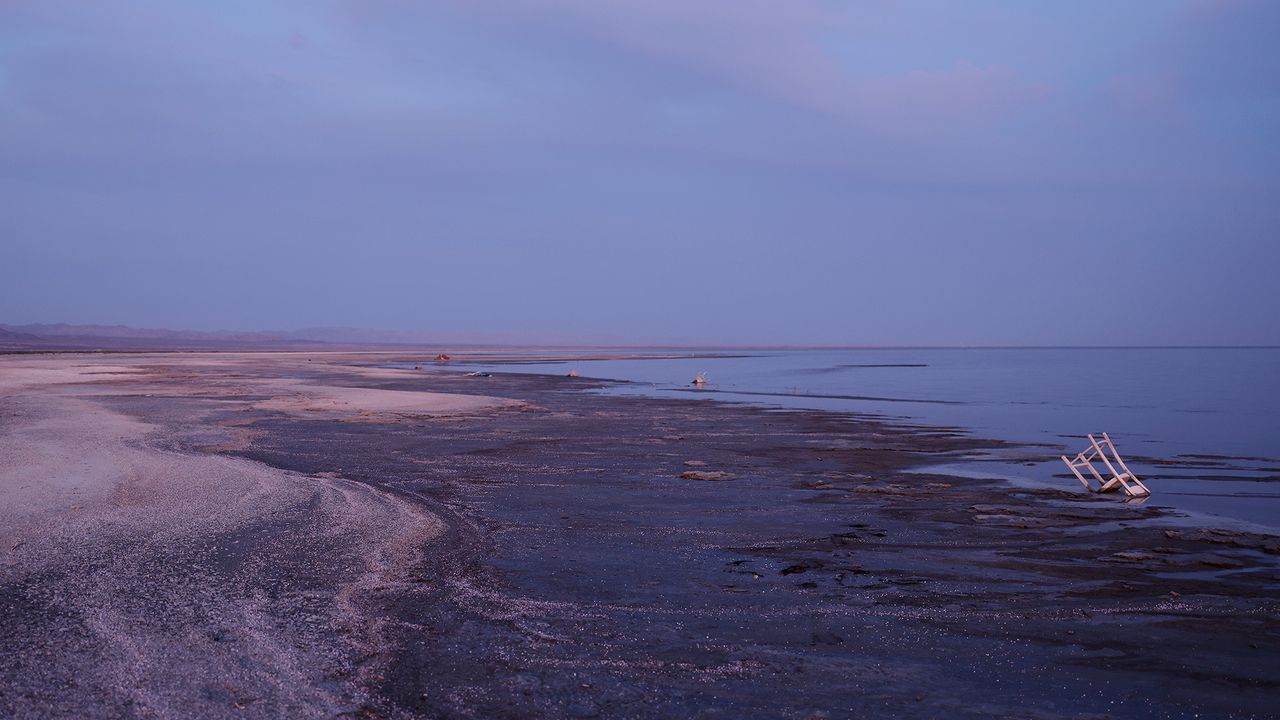
# Toxic Dust from Shrinking Salton Sea Harms Vulnerable California Communities
California's Salton Sea, once celebrated as a reclaimed desert oasis, now threatens public health in surrounding low-income neighborhoods. Medical anthropologist Ann Cheney from UC Riverside documents how the lake's shrinkage exposes toxic lakebed sediments that contaminate the air over nearby communities.
The Salton Sea formed accidentally in 1905 when irrigation canals breached, flooding the desert basin. For decades it supported fishing and recreation. Today the lake shrinks annually as agricultural runoff diminishes and water transfers redirect flows to Los Angeles and San Diego. As the waterline recedes, exposed lakebed sediment—laden with arsenic, selenium, and other contaminants from agricultural chemicals and industrial waste—dries into dust.
Cheney's research focuses on how this environmental hazard disproportionately affects predominantly Hispanic and low-income populations living in nearby cities like Calipatria, Brawley, and Westmorland. These communities lack the political and economic resources to relocate or pressure policymakers for solutions. Residents experience elevated rates of respiratory illness, asthma, and other health conditions linked to particulate exposure.
The dust doesn't stay localized. Wind carries particles across the region's agricultural valleys, affecting air quality over a much broader area. Cheney describes the situation as a "really poor quality of life" for residents caught between the environmental crisis and economic dependency on regional agriculture.
Solutions remain elusive. Proposed mitigation strategies range from dust suppression techniques and habitat restoration to major water infrastructure changes. The state has invested in some dust-control measures, but environmental scientists argue these efforts remain insufficient given the scale of the problem and the ongoing decline of the lake.
Cheney's work highlights how environmental degradation intersects with