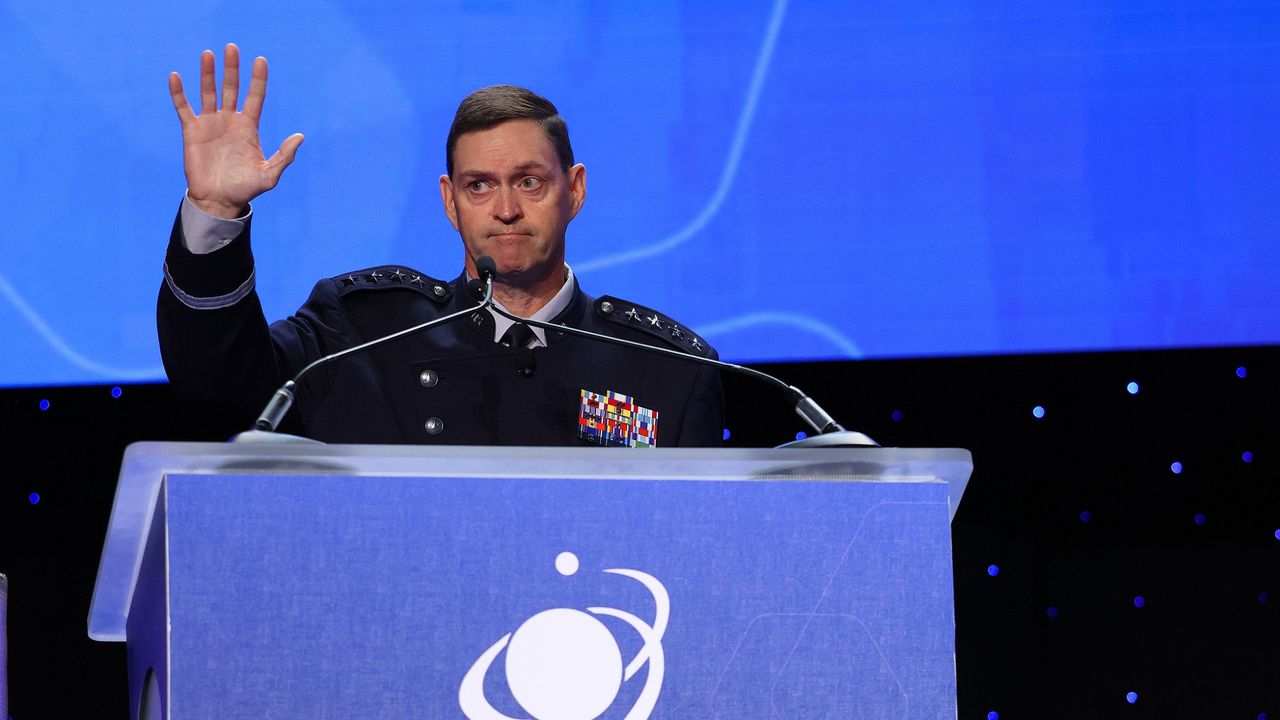
General Chance Saltzman, outgoing Chief of Space Operations for the U.S. Space Force, issued a sobering warning during his final public address. He stated that if armed conflict reaches space, civilians and military personnel alike would find themselves unable to escape the consequences.
Saltzman's remarks underscore escalating concerns within military leadership about the vulnerability of orbital infrastructure. Satellites support critical functions on Earth, from GPS navigation and financial transactions to weather forecasting and military communications. Disruption or destruction of these assets would cascade through civilian and military systems simultaneously, creating what strategists call a "war zone" that encompasses the planet below.
The Space Force chief's warning reflects growing tensions in orbital domains. China conducted an anti-satellite test in 2007 that created thousands of debris fragments, demonstrating capabilities to threaten space infrastructure. Russia has also tested counter-space weapons in recent years. These capabilities have prompted the Space Force and Department of Defense to prioritize resilience in space systems and develop plans for potential conflict beyond Earth's atmosphere.
Saltzman's tenure concluded amid these geopolitical pressures. His final message emphasized that space warfare differs fundamentally from traditional conflicts. Ground troops can retreat to safe zones. Naval fleets can relocate. But space assets operate above populated areas, and their destruction or malfunction affects everyone below. A cascade of satellite failures could disable communication networks, compromise power grids, disrupt emergency services, and threaten supply chains.
The Space Force has developed contingency plans for "degraded" space environments where satellites are damaged or destroyed. However, experts acknowledge significant gaps in ground-based backup systems and terrestrial infrastructure designed to function without space support.
Saltzman's parting words serve as institutional messaging to policymakers and the public. The U.S. military establishment increasingly recognizes that preventing conflict in space ranks among the highest strategic priorities. Unlike nuclear deterrence