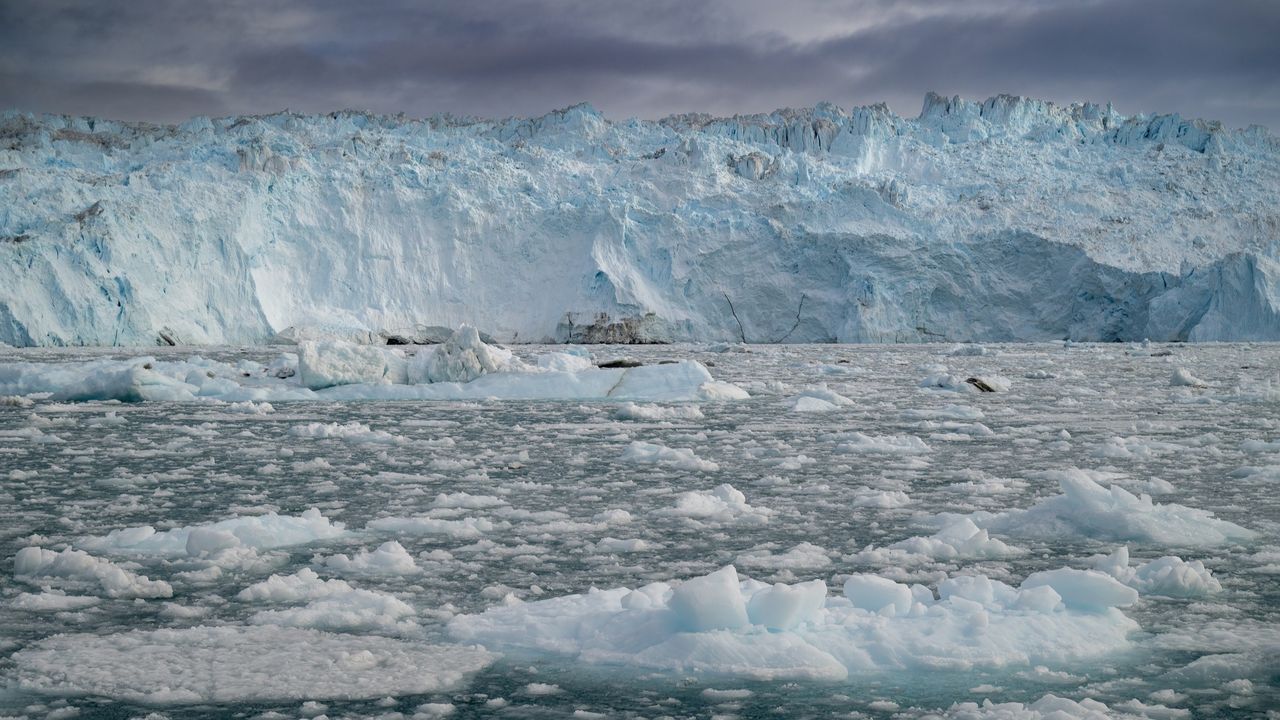
A new modeling study reveals that melting Greenland ice will substantially weaken the Atlantic Meridional Overturning Circulation, the system of currents that regulates temperatures across the North Atlantic and beyond. However, researchers found the circulation likely won't completely collapse, even under scenarios of accelerating ice melt.
The Atlantic Meridional Overturning Circulation, which includes the Gulf Stream, transports warm water northward and cold water southward. This circulation is density-driven, powered by the sinking of cold, salty water in the North Atlantic. Freshwater from Greenland's ice sheet reduces this water's salinity, making it less dense and slowing the sinking process that fuels the entire system.
The modeling study predicts strong weakening as meltwater continues to pour into the North Atlantic. Researchers found the circulation's strength could decline significantly over the coming decades and centuries. Yet the system possesses enough resilience that total shutdown remains unlikely, even under high-emissions climate scenarios.
This finding sits between two extremes that have dominated scientific debate. Some earlier research suggested potential for an abrupt, irreversible collapse of Atlantic currents, which would trigger catastrophic regional cooling and disrupted weather patterns. Other analyses argued the system would prove more resistant to freshwater input.
The new modeling incorporates updated ice sheet dynamics and ocean circulation physics, offering a more nuanced picture. The weakening will still have profound consequences for climate across the Northern Hemisphere. Europe, which benefits from warm Gulf Stream waters, would experience cooler temperatures. Atlantic hurricane patterns could shift. Regional sea levels would rise along the U.S. East Coast as warm water no longer piles up northward.
The study clarifies that reversibility matters here. If the circulation weakens substantially but doesn't collapse entirely, it retains the potential to recover if emissions decline and meltwater input slows.