# The Ancient Journey Behind Your Perseid Meteor
The Perseid meteor shower, one of the year's most reliable celestial events, traces its origins back billions of miles through space and thousands of years through time. Each meteor that streaks across August skies has traveled an extraordinary path before igniting in Earth's atmosphere.
The Perseid meteors originate from Comet Swift-Tuttle, a periodic comet discovered in 1862 that returns to the inner solar system roughly every 133 years. As this icy body orbits the sun, it sheds dust and rock fragments along its trajectory. These particles remain scattered throughout the comet's orbital path, forming a debris stream that Earth passes through each August.
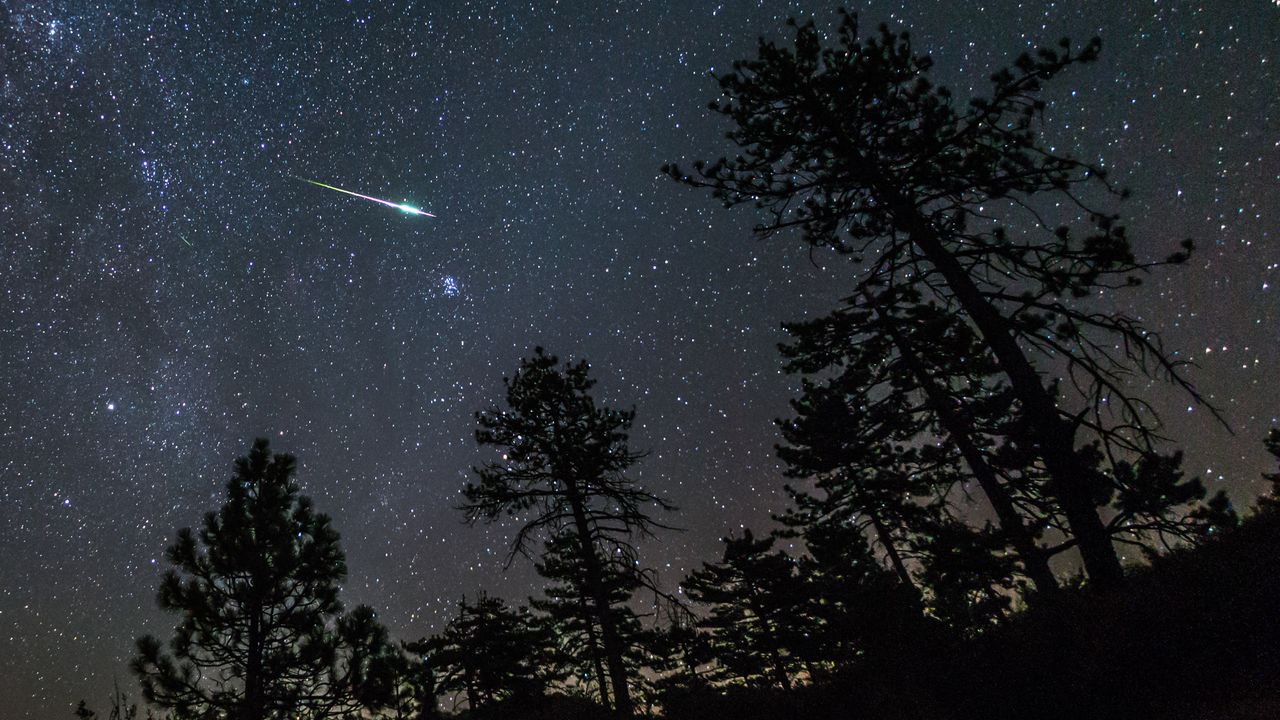
When our planet intersects this cosmic debris field, particles traveling at approximately 37 miles per second collide with the upper atmosphere. Friction heats these fragments to thousands of degrees, causing them to ablate and emit light. This process creates the luminous trails observers see as shooting stars. Most Perseid meteors originate from particles no larger than grains of sand.
The age of these particles reflects the age of Swift-Tuttle itself. Some fragments have circulated through the inner solar system for thousands of years, knocked loose during previous perihelion passages. Older material drifts farther from the comet's path due to solar wind and gravitational interactions. Newer debris remains closer to Swift-Tuttle's orbit, ensuring fresh material feeds the annual display.
This ancient supply chain makes the Perseid shower one of the most predictable meteor events. Observers can expect 50 to 100 meteors per hour during peak activity under dark skies, though the shower produces some activity throughout late July and August.
Understanding meteor shower origins helps astronomers track cometary activity and study primordial solar system material. The particles burning up