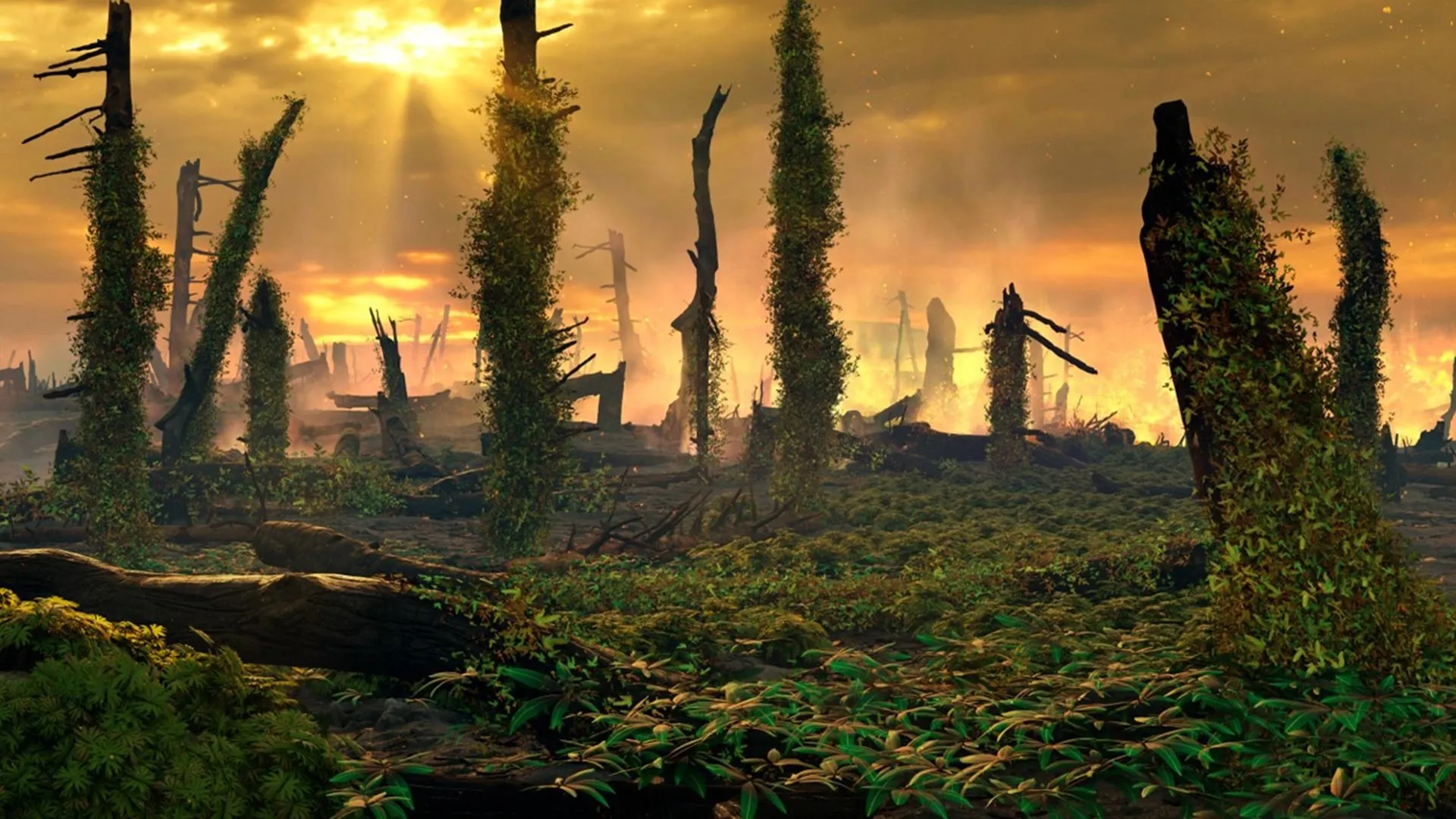
Fossil evidence reveals that ancient fern savannahs fueled an extended wildfire catastrophe across Triassic Europe during the end-Triassic mass extinction event, roughly 201 million years ago. Researchers found that these ferns possessed a unique ability to rapidly regenerate after fires, continuously replenishing combustible material and perpetuating the cycle of destruction.
The discovery emerges from detailed analysis of sedimentary layers and charcoal deposits from this extinction period. Scientists identified repeated fire scars in the geological record alongside evidence of fern regrowth, indicating that flames swept through the landscape multiple times in succession. Each fire temporarily cleared vegetation, yet the ferns bounced back swiftly, creating dense new growth that became tinder for the next conflagration.
This pattern distinguished the end-Triassic landscape from other mass extinction events. Unlike ecosystems dominated by slower-growing trees, fern-dominated savannahs could regenerate within seasons or a few years, maintaining abundant fuel loads. The researchers propose that volcanic activity, which characterized this extinction interval, may have provided initial ignition sources. Subsequent fires then perpetuated a self-reinforcing cycle as ferns repeatedly colonized burned areas.
The end-Triassic extinction eliminated roughly 76 percent of marine species and significantly restructured terrestrial ecosystems. Volcanic eruptions in the Central Atlantic Magmatic Province triggered rapid climate change, acidified oceans, and likely produced atmospheric ash and toxic gases. Against this backdrop of environmental upheaval, the fern-fire feedback loop accelerated ecological collapse.
This research underscores how vegetation type fundamentally shapes fire regimes and recovery pathways during extinction crises. Fern-dominated landscapes created conditions radically different from modern fire ecology, where slower vegetation succession typically limits burning frequency. The findings illuminate how biological and physical factors interact during planetary catastroph