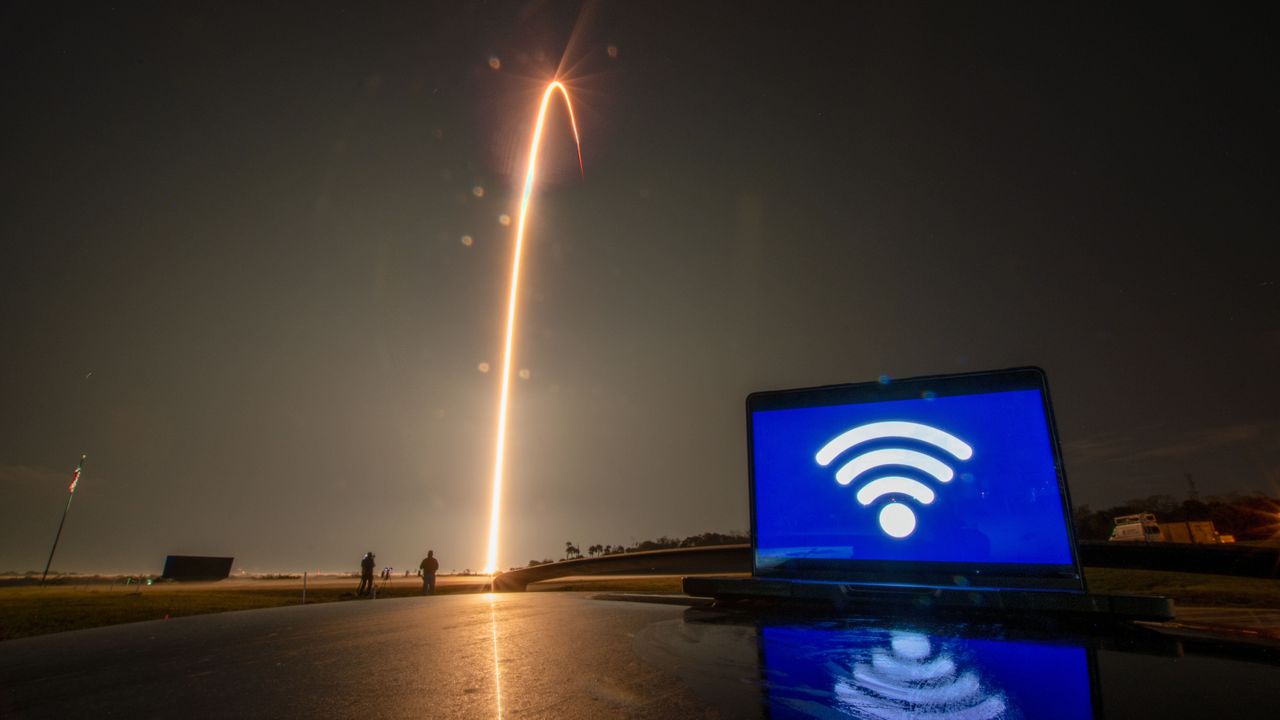
NASA plans to equip the Artemis III Orion spacecraft with SpaceX's Starlink laser communication terminals to transmit 4K video and data back to Earth during lunar missions. The partnership marks a shift toward commercial space infrastructure for deep-space operations.
Laser communication systems offer vastly higher data rates than traditional radio frequency methods. The Starlink terminals can transmit gigabits of data per second, enabling real-time high-definition video feeds from the lunar surface and spacecraft operations. This capability allows mission controllers to monitor astronaut activities, scientific experiments, and spacecraft health with unprecedented clarity.
The Orion spacecraft, NASA's primary vehicle for the Artemis program, currently relies on conventional radio communications. Adding laser terminals creates redundancy and boosts bandwidth for the mission's extensive documentation requirements. Astronauts will stream 4K video directly to Earth, compared to the lower resolution imagery available during Apollo missions decades ago.
SpaceX's Starlink constellation serves as the receiving ground station network. The laser terminals on Orion link to Starlink satellites in low Earth orbit, which relay signals to SpaceX ground stations. This approach leverages existing commercial infrastructure rather than requiring NASA to build dedicated deep-space communication networks.
The Artemis III mission targets a crewed lunar landing in the mid-2020s. Enhanced communications support the program's scientific objectives, which include detailed lunar surface exploration and technology demonstrations. High-bandwidth data transmission becomes critical for transmitting telemetry from scientific instruments, suit cameras, and mission documentation.
This partnership reflects NASA's growing reliance on commercial space capabilities. SpaceX already provides crew and cargo transport through Commercial Crew and Cargo programs. Extending that relationship to deep-space communications consolidates NASA's commercial partnerships while reducing development costs.
Technical challenges remain. Laser systems require precise alignment between moving spacecraft and satellites. Atmospheric conditions and orbital