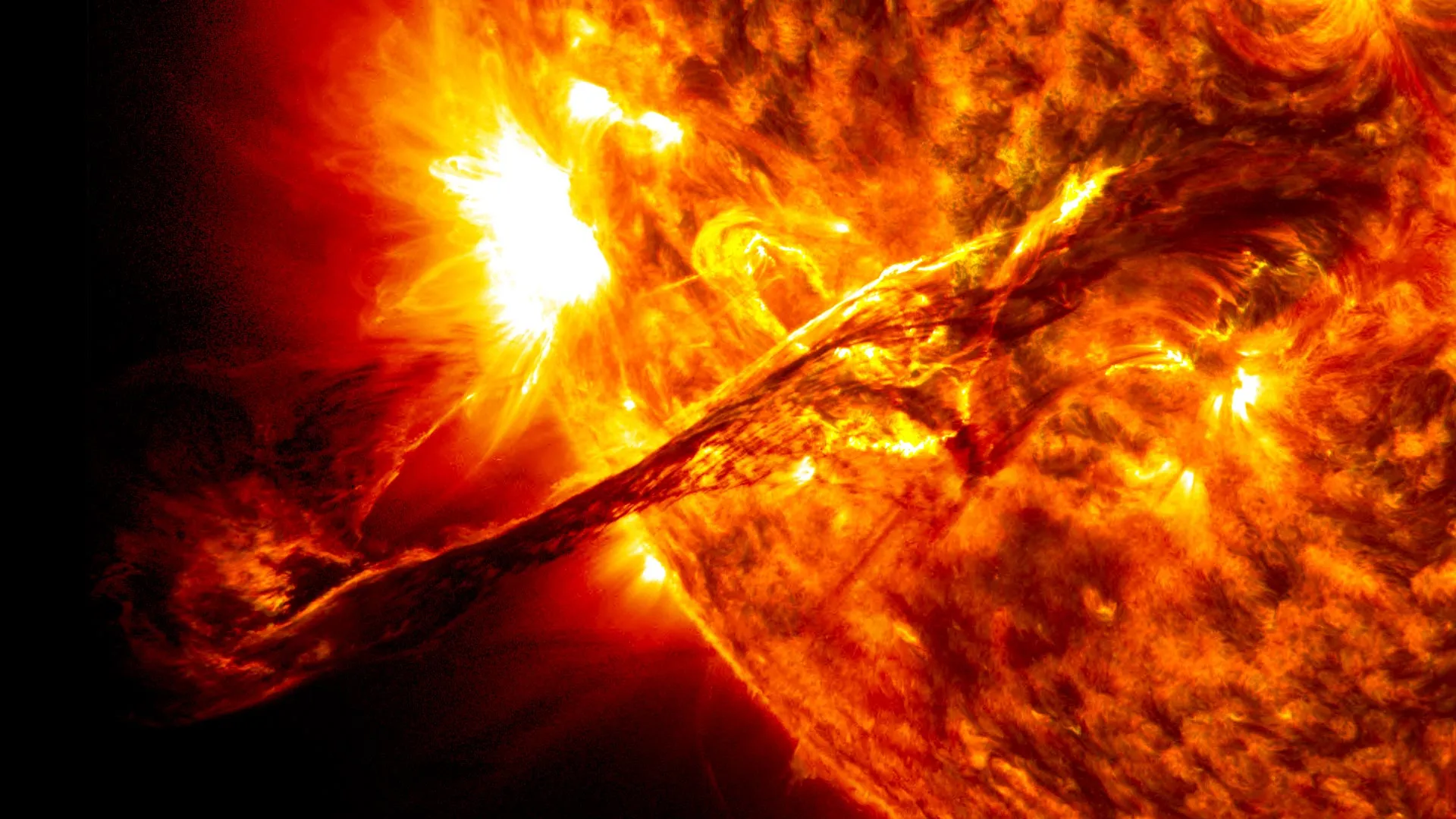
A newly discovered inflection point in the Sun's 11-year magnetic cycle could enable forecasts of solar storms up to seven years ahead of current capabilities, researchers have found.
The "switch-off" point marks an abrupt cessation of intense solar activity within each cycle. At this transition, the remaining sunspot population provides a reliable indicator of the subsequent cycle's strength. Scientists can use this metric to predict whether future solar cycles will generate weak, moderate, or severe space weather.
Current forecasting methods rely on measurements taken near solar minimum, the cycle's quietest phase, limiting predictions to roughly four years in advance. The discovery of this earlier inflection point extends the forecast window substantially.
Initial analysis using this new framework suggests Solar Cycle 26, scheduled to peak around 2035, will likely be moderate in intensity. However, researchers caution that more precise predictions will emerge within approximately two years as additional data accumulates.
Solar cycles directly influence space weather hazards. Intense cycles produce coronal mass ejections and solar flares capable of disrupting power grids, satellites, and communications systems. Moderate cycles present lower disruption risks but still warrant monitoring. Early warning enables utilities, space agencies, and telecommunications companies to prepare infrastructure and adjust operational protocols.
The research hinges on understanding solar dynamo mechanisms. The Sun's magnetic field reverses approximately every 11 years, driving cyclical changes in sunspot frequency and solar wind intensity. The newly identified switch-off point appears to correlate with fundamental transitions in the Sun's interior magnetic generation processes.
This discovery represents a refinement in solar physics rather than a complete overhaul of existing theory. Scientists continue refining models of magnetic field evolution, but the identification of this predictive marker demonstrates that the Sun's behavior contains measurable harbingers of future activity.
The ability to forecast solar activity seven years in advance carries practical implications for space weather preparedness.