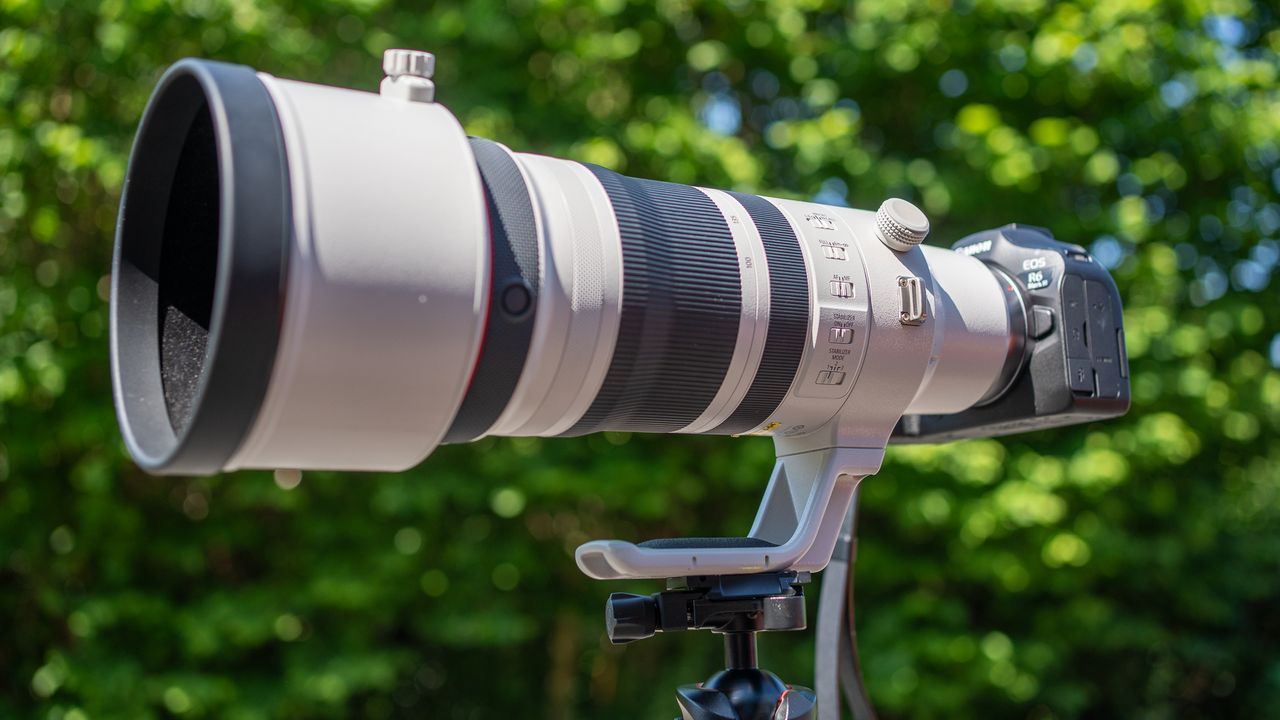
Canon released a new RF 100-300mm f/2.8L IS USM telephoto zoom lens with a $10,000 price tag. Live Science's testing team evaluated whether the lens justifies its cost against traditional prime lenses favored by wildlife photographers.
The lens combines a 3x zoom range with a constant f/2.8 aperture throughout the entire focal length. This aperture remains unusually wide for a telephoto zoom, a technical achievement that typically commands premium pricing. The RF mount design integrates with Canon's mirrorless camera system.
Wildlife photography traditionally relies on prime lenses, which offer fixed focal lengths but superior optical performance and faster apertures. The Canon lens attempts to bridge that gap by delivering zoom flexibility without sacrificing the light-gathering ability primes provide.
Testing revealed trade-offs. The lens delivers sharp images across its range with effective image stabilization for handheld shooting. Its constant f/2.8 aperture enables faster shutter speeds in challenging light conditions, a practical advantage in unpredictable wildlife scenarios. The build quality meets professional standards with weather sealing.
However, the price remains prohibitive for most photographers. At $10,000, the lens costs roughly double comparable telephoto zooms with variable apertures. The weight and size, while manageable for mirrorless systems, still demand substantial support equipment. Autofocus performance, though competent, doesn't outpace some older prime lenses significantly.
The verdict hinges on use case. Professional wildlife photographers shooting regularly in lower light conditions might recover that investment through improved image quality and shooting speed. Serious hobbyists or those working in bright outdoor conditions would struggle to justify the expense over alternatives costing one-third to one-half the price.
Canon's engineering proves technically sound, yet the lens represents diminishing returns. It excels at specific tasks but doesn't definit