Richard Feynman posed a deceptively simple question in the 1960s. If you reversed the flow direction of a garden sprinkler so water flowed in instead of out, would the sprinkler spin forward or backward. Decades later, the answer remained contested among physicists.
A team of mathematicians has now settled the dispute using custom-built "silly sprinklers" and rigorous experiments. Their work demonstrates that sprinkler rotation stems from the momentum of water flowing through the internal pipes, not from external water pressure or reaction forces as competing theories proposed.
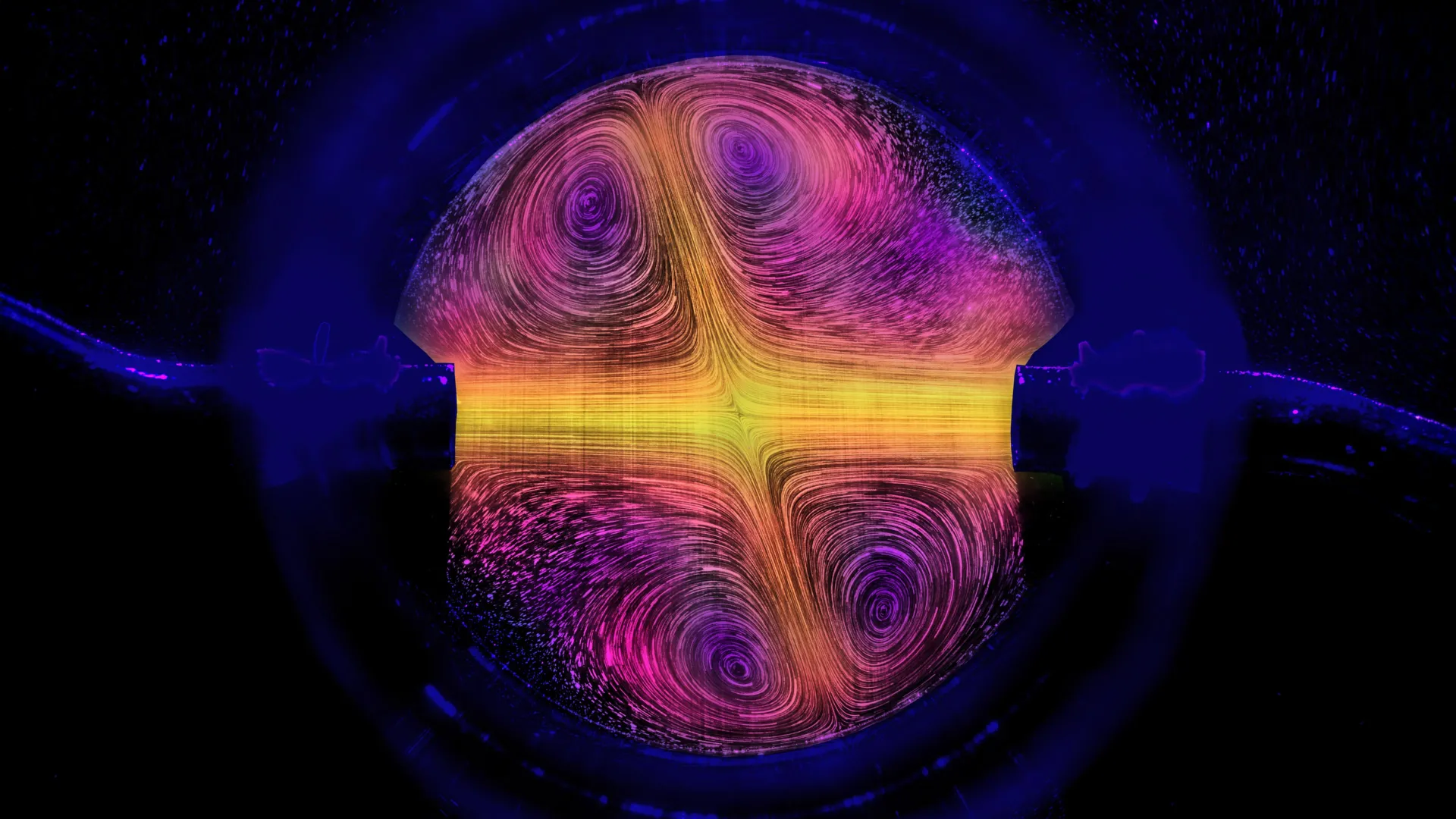
The researchers built transparent sprinklers with adjustable configurations to isolate variables. They measured rotation rates across different water flow speeds and pipe geometries. The experiments confirmed that internal momentum transfer, not external forces, drives the spinning motion in both forward and reverse configurations.
This resolves what became known as Feynman's sprinkler problem. The physicist himself remained uncertain about the answer, and the question sparked considerable debate in physics communities for decades. Multiple theoretical frameworks competed to explain the phenomenon, each with different predictions about reversed-flow behavior.
The findings have practical applications beyond settling an old physics puzzle. Understanding the precise mechanics of fluid-driven rotation could improve designs for fluid-powered machines, turbines, and other devices that rely on controlled water or liquid motion. Engineers can now apply these principles more accurately when designing systems where efficiency and precision matter.
The research illustrates how physical intuition sometimes fails us. What seems like it should happen one way often produces unexpected results when tested carefully. Feynman's apparent simplicity masked genuine complexity that required decades and custom experimental apparatus to unravel.
The work also demonstrates the value of playful scientific inquiry. The researchers' willingness to build "silly" versions of everyday objects, rather than accepting decades of theoretical debate, proved decisive. Sometimes progress requires questioning assumptions and testing ideas directly rather than relying