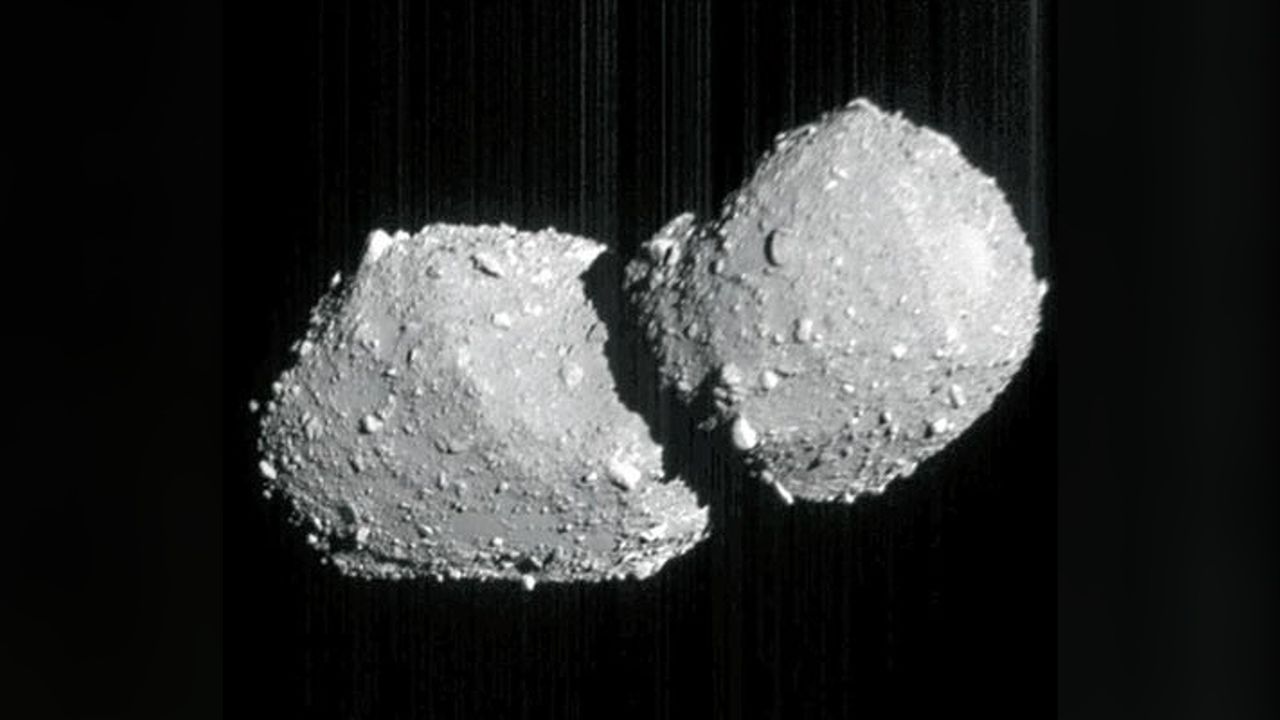
Japan's Hayabusa2 spacecraft captured striking images of a near-Earth asteroid during an extremely close approach on July 5, but the mission required heated internal debate before scientists approved the risky maneuver.
The flyby presented significant technical and safety challenges. Some team members opposed the close pass, warning that proximity to the asteroid carried substantial risk of collision or damage to the spacecraft. Project leaders ultimately decided the scientific payoff justified the hazard.
Hayabusa2 has successfully conducted multiple high-risk operations since launching in 2014. The spacecraft previously collected samples from asteroid Ryugu and returned them to Earth in 2020, demonstrating Japan's Advanced Space Agency capability in sample-return missions. The recent flyby tested the spacecraft's navigation precision and sensors in ways that pushed operational boundaries.
The images obtained during the close approach provide detailed views of the asteroid's surface features, composition, and structure. Scientists can use this data to refine models of asteroid formation and evolution. Such observations also contribute to planetary defense efforts by improving our understanding of near-Earth objects and their trajectories.
Close-proximity asteroid flybys carry genuine risks but generate irreplaceable scientific data. Engineers designed safeguards into Hayabusa2's systems specifically to handle high-stress scenarios. The decision to proceed reflects confidence in both the spacecraft's engineering and the team's ability to manage uncertainty.
The debate among Hayabusa2 team members reflects broader tensions in space exploration between caution and discovery. Pushing technological limits enables breakthrough observations but requires accepting real danger. Japan's willingness to accept calculated risk positions the nation as a leader in advanced planetary science missions.