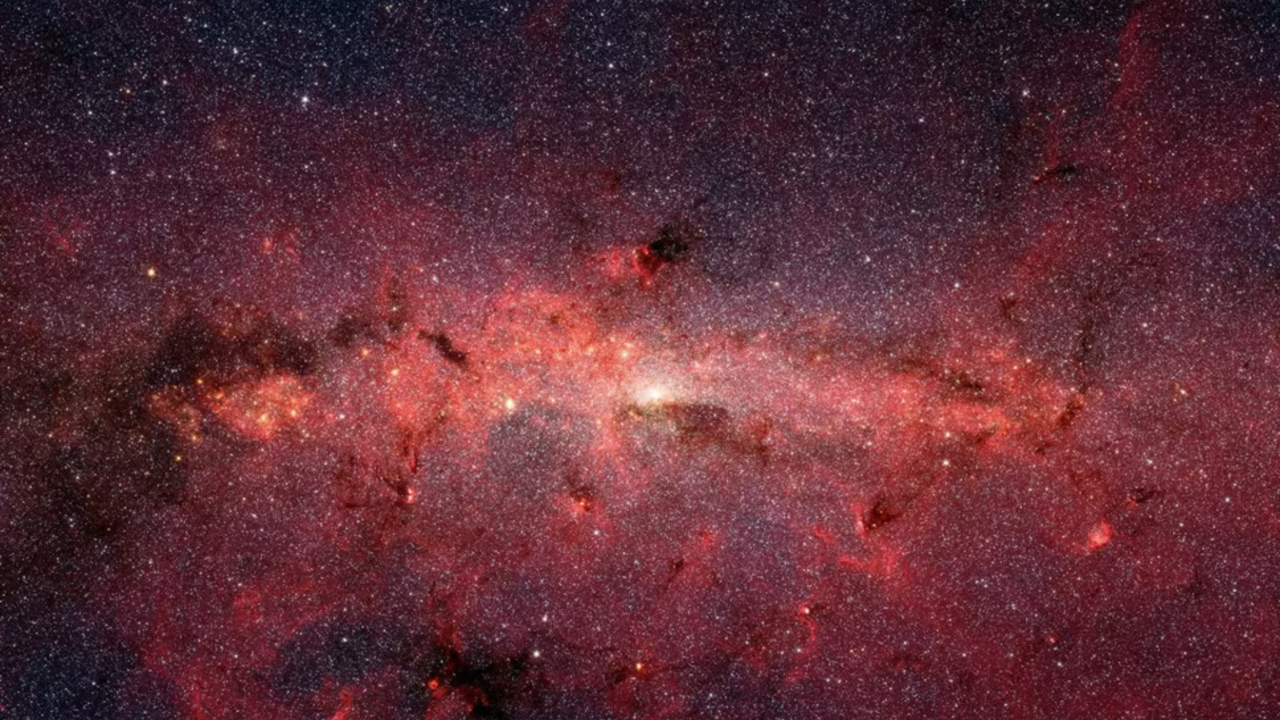
Astronomers detected ribose, a five-carbon sugar fundamental to RNA and DNA, in interstellar space for the first time. The discovery marks the first confirmed detection of a pentose sugar in the cosmos, suggesting that the building blocks of life form spontaneously in the harsh environment between stars.
Researchers identified ribose signatures using radio telescope observations of molecular clouds, the dense regions of gas and dust where stars and planets form. The sugar appeared in concentrations sufficient to contribute meaningfully to prebiotic chemistry on young planetary bodies.
This finding extends earlier work showing that simpler organic compounds form in space through natural chemical reactions. Previous studies identified amino acids, nucleobases, and other life-related molecules in meteorites and interstellar environments. Ribose detection now demonstrates that even more complex sugar structures assemble without biological processes.
The implications reach directly to astrobiology. Earth's early chemistry required sugars to construct RNA, which likely preceded DNA in life's emergence. If ribose forms readily in interstellar space and travels to new planets via meteoritic delivery, young worlds inherit preformed molecular components for biochemistry. This reduces the chemical "gap" between non-living chemistry and living systems.
The research relied on spectroscopic analysis, matching the radio signatures of space molecules to laboratory measurements of ribose's unique electromagnetic fingerprint. Distinguishing ribose from chemically similar compounds required precise calibration and multiple observation points.
Limitations remain. Radio telescopes detect only the most abundant molecules in particularly dense clouds. Rarer sugars may exist undetected. Additionally, forming ribose in space requires specific conditions that may not occur uniformly across all molecular clouds. The exact reaction pathways producing ribose in the interstellar medium remain incompletely understood.
The discovery does not prove life emerged from space-delivered compounds, but strengthens the plausibility of panspermia theories proposing that