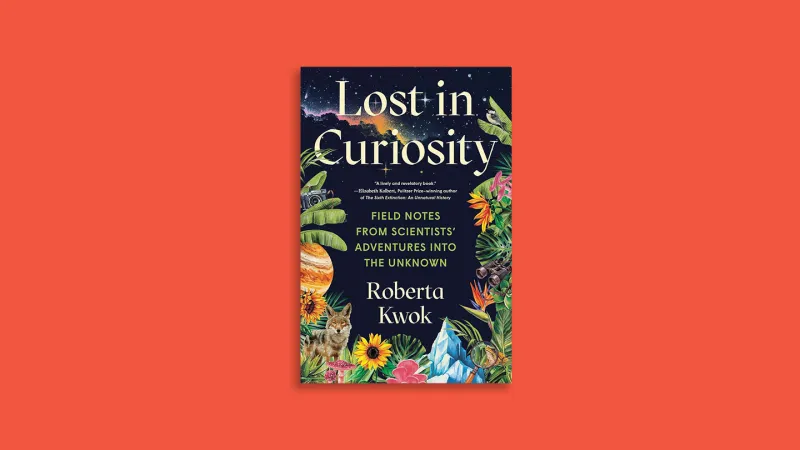
# Lost in Curiosity Explores the Unglamorous Side of Scientific Discovery
Science journalist Roberta Kwok's new book "Lost in Curiosity" pulls back the curtain on how researchers actually work. Rather than presenting clean, linear discoveries, Kwok documents the messy process of getting nature to reveal its secrets.
The book moves beyond the polished narratives found in peer-reviewed journals and press releases. Kwok spent time with working scientists across multiple disciplines, observing how they navigate dead ends, funding constraints, and the grinding reality of experimental work. She captures the false starts, the equipment failures, and the months of tedious data collection that rarely make it into published papers.
Kwok's reporting shows that the path from question to answer involves substantial uncertainty. Researchers often pursue promising leads that evaporate. Equipment breaks. Results contradict expectations. Grant money runs out before projects finish. Yet these obstacles rarely appear in final publications, creating a distorted public view of how science progresses.
The book addresses why this gap matters. When people see only the successful outcomes, they develop an unrealistic picture of scientific achievement. This can discourage young scientists who encounter normal setbacks and assume they lack talent. It also shapes public understanding of how reliable scientific findings truly are. Science advances through accumulated evidence and repeated testing, not through eureka moments.
Kwok's work resonates amid broader conversations about research transparency and reproducibility. Major scientific organizations have increasingly emphasized the need to share methodologies, failures, and uncertainties. Her book contributes to this shift by humanizing the research process and demonstrating that confusion and inefficiency are features, not bugs, of how knowledge gets built.
"Lost in Curiosity" serves journalists, educators, and anyone curious about how the scientific enterprise actually functions. By normalizing the messy middle, Kwok helps readers understand that robust science emerges from