# The World's Oldest Weapons Span Hundreds of Thousands of Years
Archaeologists have identified several ancient artifacts that compete for the title of world's oldest weapon, with the oldest reaching back more than 400,000 years into human prehistory.
The frontrunners include hand axes and pointed stone tools discovered at various archaeological sites across Africa, Europe, and the Middle East. These implements, fashioned from flint and other stone materials, represent humanity's earliest attempts to create purpose-built instruments for hunting and defense. Hand axes, which emerged during the Lower Paleolithic period, rank among the most enduring weapon designs in human history, remaining in use for roughly 1 million years.
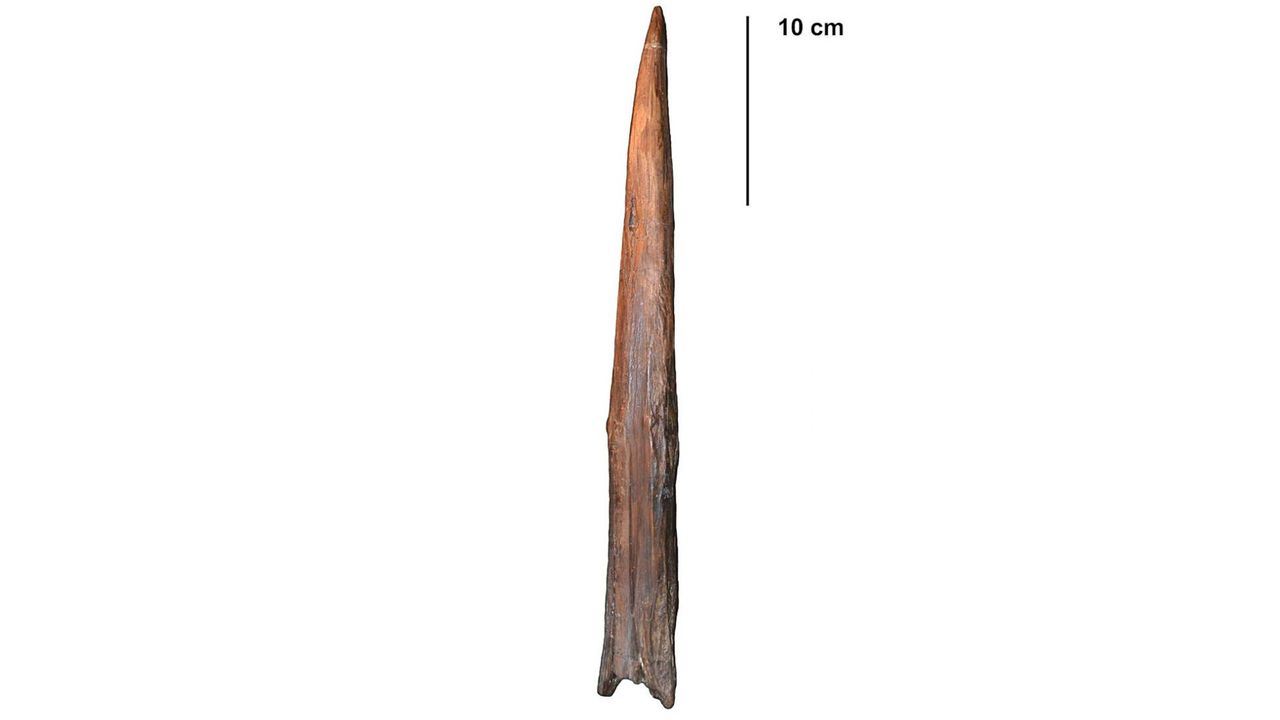
Other early contenders include wooden spears, though these rarely survive in the archaeological record due to organic decay. A notable exception is the Clacton spear, a wooden shaft discovered in England dated to approximately 400,000 years ago, which shows clear evidence of intentional sharpening for hunting large game.
The distinction of "oldest weapon" depends partly on how researchers define the term. Simple rocks used as bludgeons likely predate any formally crafted tool by hundreds of thousands of years, but archaeologists typically credit deliberately designed implements as the first true weapons. The transition from opportunistic stone use to intentional weapon manufacture marks a cognitive leap in human development, suggesting early humans planned hunts and anticipated future needs.
Identifying these ancient weapons reveals shifts in hunting strategies, social organization, and brain development. The refinement of stone tool technology correlates with increased dietary diversity and the ability to hunt larger prey animals, providing evolutionary advantages that shaped human survival and migration patterns.
Dating these artifacts involves radiometric analysis, stratigraphic positioning, and contextual evidence from surrounding materials. However, organic materials decompose readily, leaving researchers with an incomplete picture of early weaponry. The weapons that survive represent only a