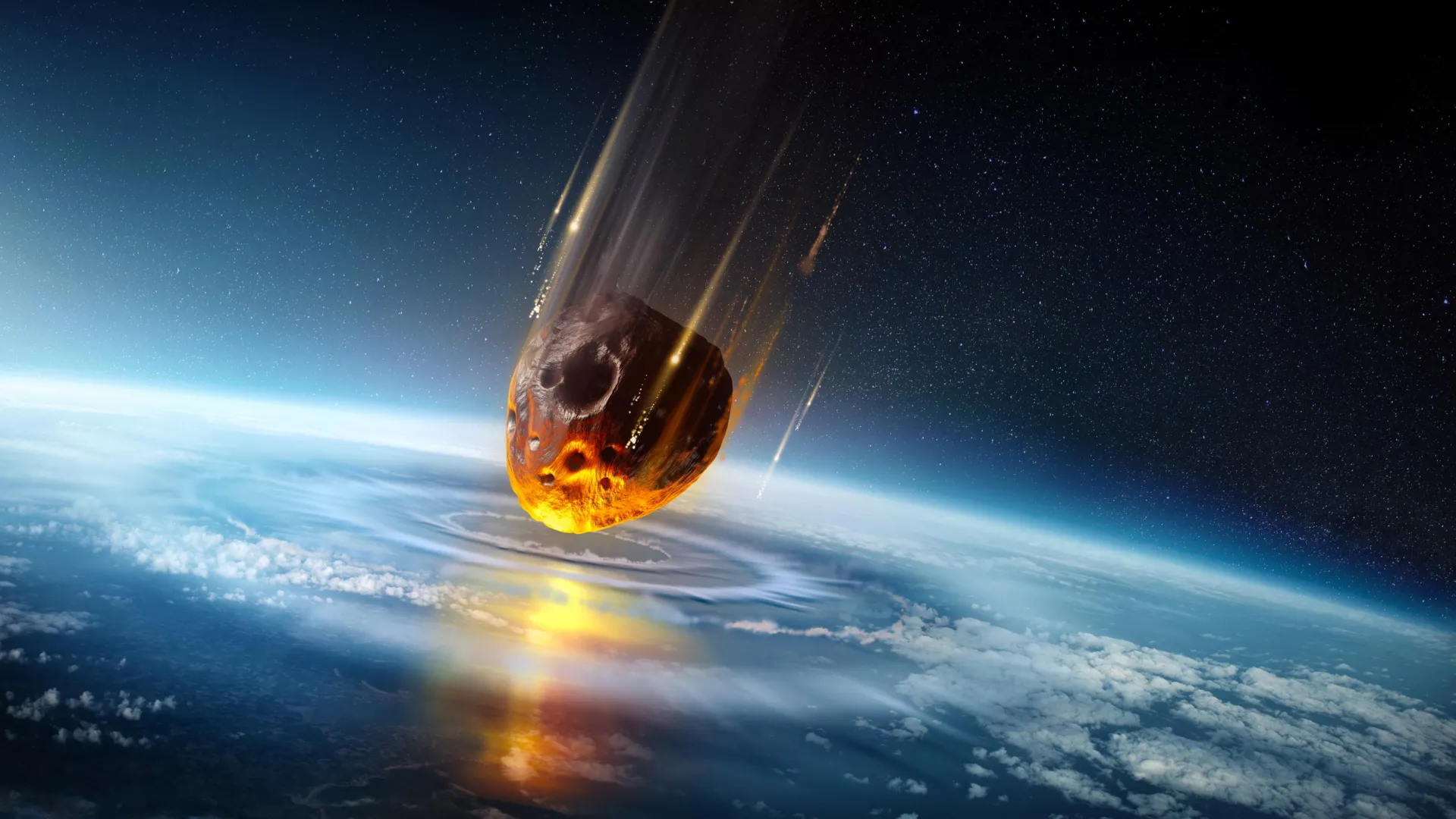
A team of researchers has identified the meteorite type responsible for the mass extinction event 66 million years ago, revealing an asteroid far rarer than previously believed. The impactor was likely a carbonaceous chondrite, or CO chondrite, originating from a distant region of the solar system beyond Jupiter's orbit.
The finding challenges the prevailing explanation for how the impact killed most life on Earth. Scientists long attributed the extinction primarily to sulfur aerosols released when the asteroid struck the Yucatan Peninsula, blocking sunlight and causing global cooling. New chemical analysis suggests the story was different. The CO chondrite's composition indicates that planet-cooling dust and debris from the collision itself, rather than sulfur vaporization, dealt the lethal blow to Earth's biosphere.
Researchers examined rare meteorite samples and compared their chemical signatures to models of impact chemistry. The CO chondrite classification places the asteroid among the most uncommon types in the solar system, making it a statistical oddity. Most asteroids that strike Earth belong to more common classes. This rarity raises questions about how such an unusual object reached a collision course with our planet.
The discovery reshapes understanding of the dinosaur extinction mechanism. While the impact crater near Chicxulub, Mexico, remains unchanged, the mechanism by which it extinguished life must be reconsidered. Dust suspended in the atmosphere proved more destructive than researchers previously modeled, blocking solar radiation and triggering rapid climate collapse that destroyed food chains across the planet.
The research team analyzed isotopic ratios and elemental abundances in meteorite samples to fingerprint the impactor's origin and composition. These chemical markers provided definitive evidence linking specific meteorite types to the extinction event.
This work represents a refinement of impact extinction theory rather than a wholesale revision. The Chicxulub impact indisputably ended the Cretaceous period.