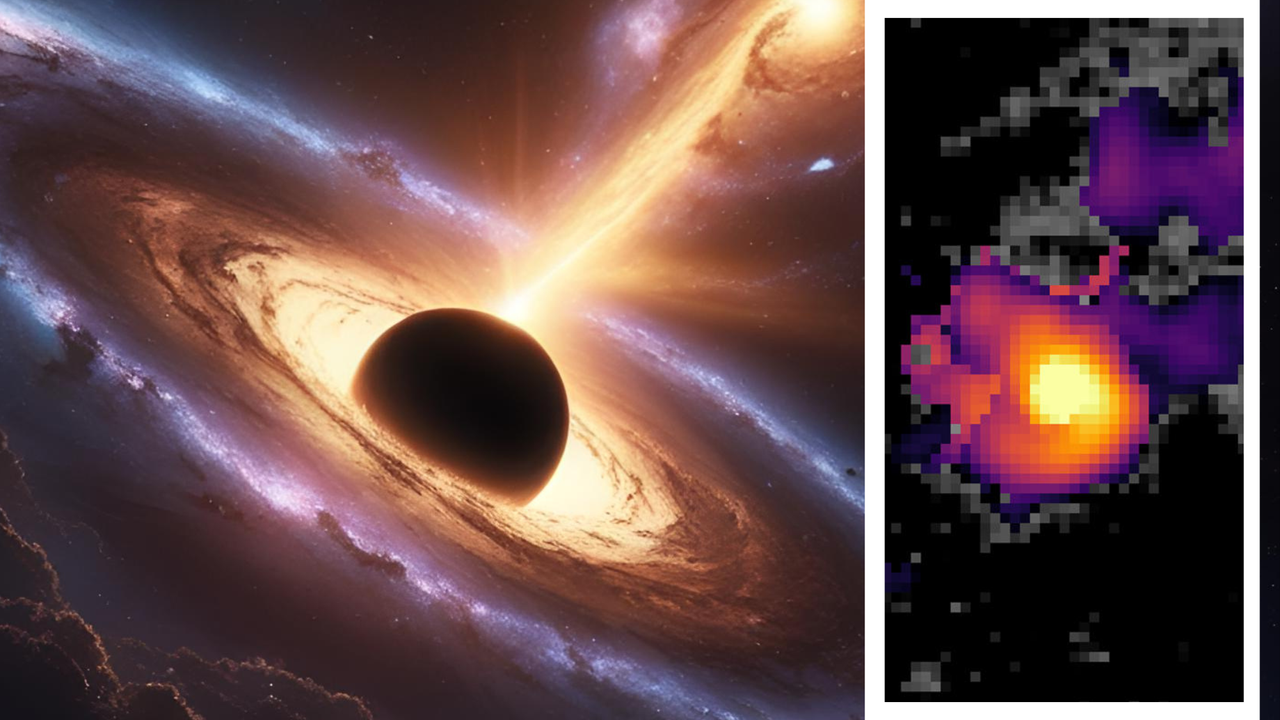
Astronomers using the James Webb Space Telescope have observed the feeding mechanisms of supermassive black holes for the first time with unprecedented clarity. The observations reveal how these cosmic giants pull material from their surrounding environments and convert it into energy.
Supermassive black holes sit at the centers of most galaxies, including our own Milky Way. They consume matter through accretion disks, where infalling gas and dust spiral inward at speeds approaching that of light. This process releases tremendous energy, making active galactic nuclei among the brightest objects in the universe.
The JWST's infrared capabilities allowed researchers to peer through dust clouds that typically obscure black hole feeding regions. Previous telescopes operating in visible light could not penetrate these barriers. The infrared observations reveal the detailed structure of material flowing toward black holes and the heating processes occurring within accretion disks.
Understanding black hole feeding mechanisms carries implications beyond pure astronomy. The energy output from accreting black holes shapes entire galaxies. Intense radiation and jets of particles from active black holes can suppress star formation across regions spanning millions of light-years. This feedback process regulates how galaxies evolve and grow.
The JWST data also provides constraints on black hole mass and growth rates. Supermassive black holes billions of times more massive than our sun exist in the early universe, posing a puzzle for formation theories. Observations of their feeding rates help determine whether they grew through continuous accretion or rare merger events.
One limitation of current observations involves temporal resolution. The JWST captures snapshots of black hole systems, not movies of feeding in real time. Understanding how accretion rates fluctuate over hours or days requires coordinated observations with X-ray telescopes and radio facilities.
The findings emerge from JWST's first year of operation, when the telescope targeted nearby active galaxies known to harbor feeding black