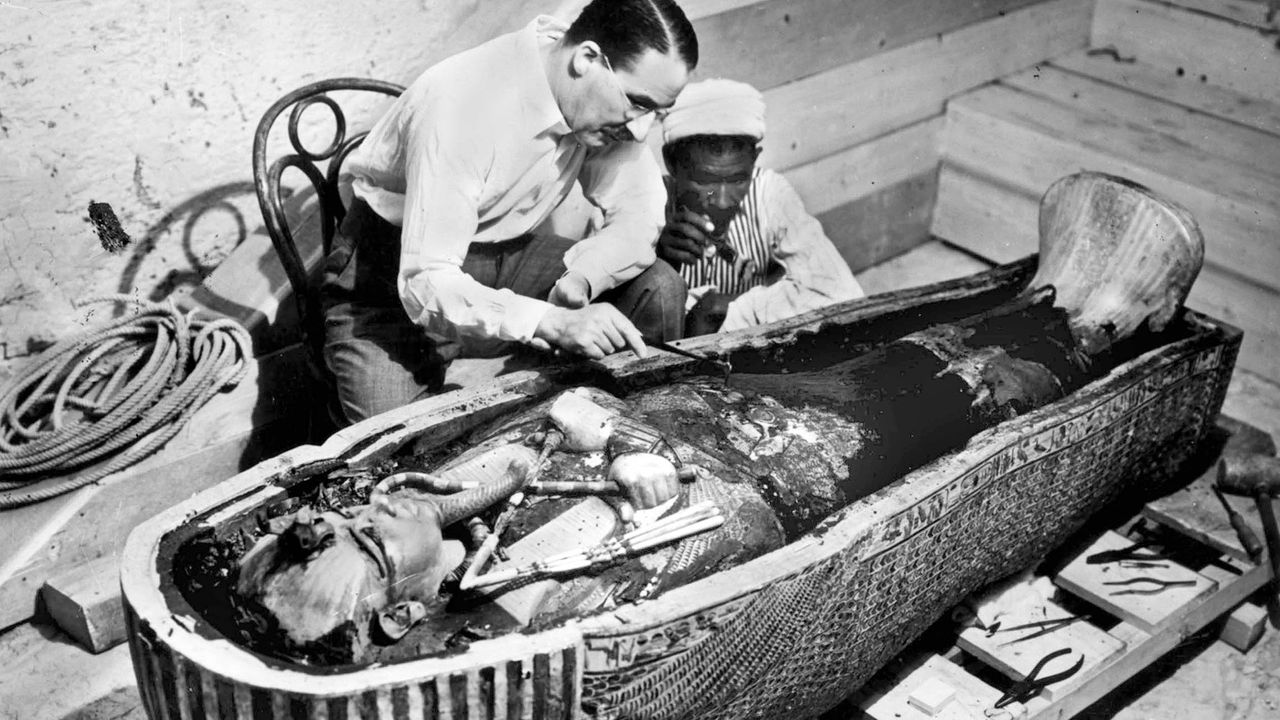
Experimental archaeologist Sam Kean explores unconventional methods scientists use to understand ancient civilizations in his new book "Dinner with King Tut: How Rogue Archaeologists Are Re-creating the Sights, Sounds, Smells, and Tastes of Lost Civilizations." The work documents researchers who recreate historical processes firsthand rather than studying artifacts alone.
One striking example involves experimental archaeologists who successfully mummified a modern human body using authentic ancient Egyptian techniques. The researchers applied methods documented in historical texts and inferred from archaeological evidence, including the removal of internal organs, treatment with natron salt, and wrapping procedures. The result reportedly resembled depictions of Ramses the Great, validating historical accounts of mummification practices.
This hands-on approach extends beyond mummification. Experimental archaeologists reconstruct ancient cooking, craftsmanship, architecture, and even sensory experiences to test whether historical descriptions and depictions actually work. By physically attempting these processes, researchers identify practical challenges, material requirements, and time investments that written records and artifact analysis alone cannot reveal.
The discipline bridges gaps between theoretical knowledge and lived experience. When archaeologists actually prepare ancient recipes, fire pottery using historical kilns, or construct buildings with period tools, they uncover details about ancient societies that conventional excavation misses. These experiments sometimes confirm historical accounts; other times they reveal inconsistencies or suggest alternative interpretations of the archaeological record.
Kean's book highlights both the scientific rigor and the unconventional nature of experimental archaeology. While some traditional archaeologists initially dismissed the approach as theatrical, the field has gained credibility by producing reproducible results and generating testable hypotheses. Modern experimental archaeologists combine materials analysis, historical texts, ethnographic comparisons, and controlled trials to reconstruct lost practices.
The mummification experiment exemplifies why this methodology matters. Understanding the exact process