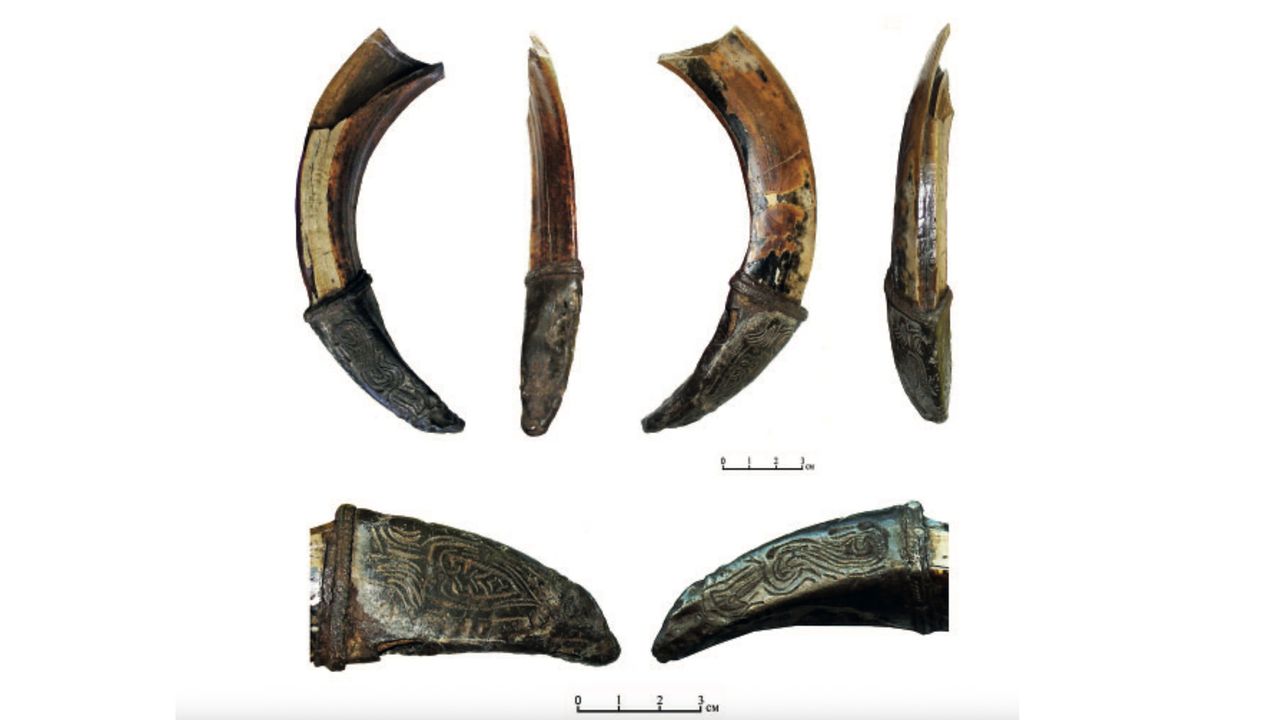
Russian archaeologists have discovered a decorated wild-boar tusk dating to the 12th century that researchers believe served as a warrior's protective amulet. The artifact, unearthed during excavations in Russia, bears ornamental markings that suggest it held ritual or spiritual significance rather than serving a purely decorative purpose.
The tusk exhibits deliberate carving and embellishment patterns consistent with objects held by medieval warriors for protection or good fortune. Wild-boar tusks held symbolic weight across many ancient and medieval cultures, often associated with strength, courage, and martial prowess. Warriors frequently carried such items into battle, believing them to possess supernatural protective properties.
The find adds to growing evidence of pre-Christian and syncretic spiritual practices among medieval Russian warriors. Archaeological context suggests the tusk belonged to someone of considerable status, possibly a soldier or nobleman. The craftsmanship visible on the artifact indicates skilled artisanship and investment of resources typically reserved for high-ranking individuals.
Dating to the 12th century places this artifact during a period of significant cultural transition in Russia, when Christian practices coexisted with older pagan traditions. Warriors of this era often maintained amulets and charms reflecting both worldviews, blending protective customs from their ancestors with Christian faith.
The discovery provides material evidence for understanding medieval Russian spiritual beliefs and warrior culture. Such talismans reveal how military personnel sought psychological or spiritual advantages before combat, seeking confidence through objects imbued with cultural and symbolic meaning.
Further analysis of the tusk, including examination of wear patterns and any remaining organic material, may clarify its use history and provide additional insight into the warrior's daily life and military campaigns. The artifact will contribute to the broader archaeological understanding of 12th-century Russian society and the spiritual practices of its martial elite.