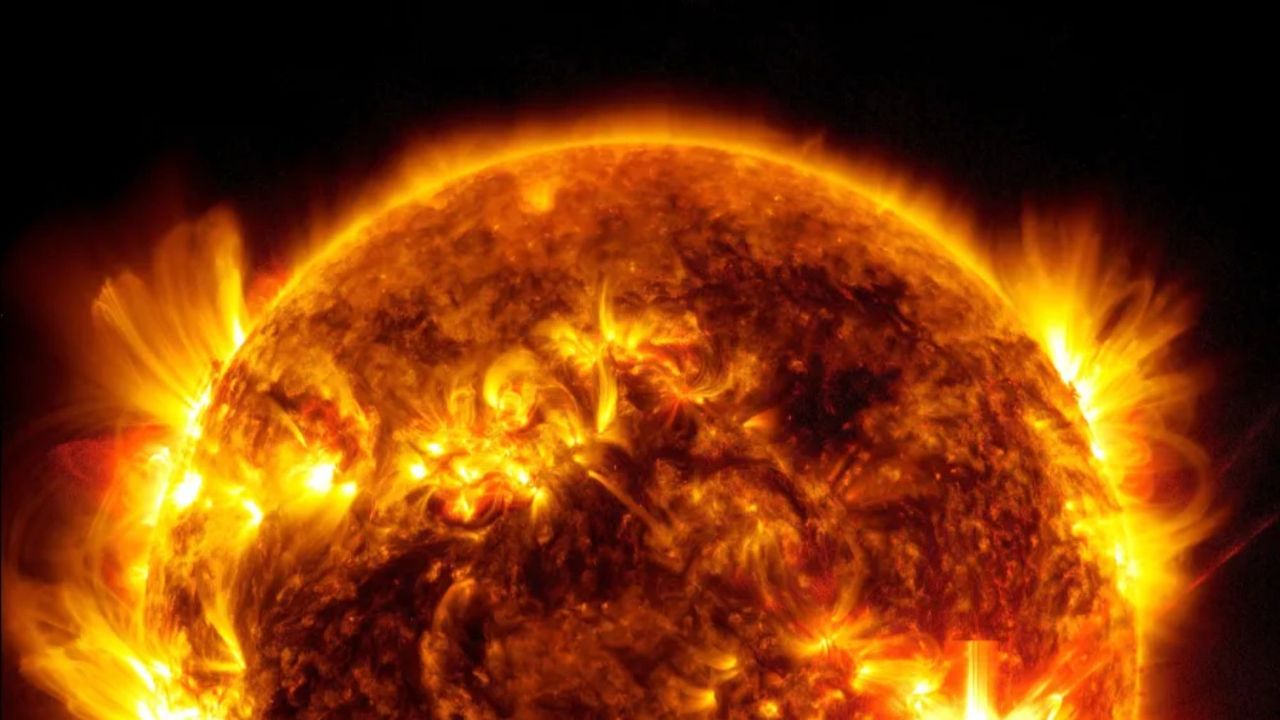
Researchers have found that the most severe solar storms could pose greater risks to modern infrastructure than current risk assessments suggest. A new study indicates that extreme geomagnetic storms, once thought to occur roughly once every thousand years, might inflict more extensive damage on satellites, electrical grids, and communication networks than existing models predict.
Solar storms occur when the sun releases massive bursts of energy and charged particles into space. When these particles collide with Earth's magnetosphere, they can trigger geomagnetic disturbances that disrupt technology. The 1859 Carrington Event remains the most powerful documented solar storm on record, destroying telegraph systems across the Northern Hemisphere.
The study expands on previous research by examining how extreme solar activity interacts with modern infrastructure at multiple scales. Scientists modeled scenarios where an event comparable to the Carrington Event struck today. The results suggest cascading failures across interconnected systems could amplify economic damage far beyond isolated equipment damage.
Satellites face particular vulnerability. A severe geomagnetic storm can degrade their functionality within hours or days, affecting GPS navigation, weather forecasting, and telecommunications. Power grids across large regions could experience simultaneous transformer failures, potentially leaving millions without electricity for extended periods. Supply chain disruptions would follow, affecting hospitals, transportation, and water treatment facilities.
The research underscores why solar storm preparedness matters for national security and infrastructure resilience. The likelihood of another extreme event striking Earth remains low in any given year, but the consequences justify preventive measures. Many experts recommend upgrading transformer designs, creating spare component stockpiles, and improving early warning systems.
Space weather monitoring has improved substantially since satellites began tracking solar activity in the 1960s. Agencies including NOAA's Space Weather Prediction Center now issue alerts when solar storms approach. However, developing protective technology and hardening infrastructure requires sustained investment that most governments have not yet prioritized adequ