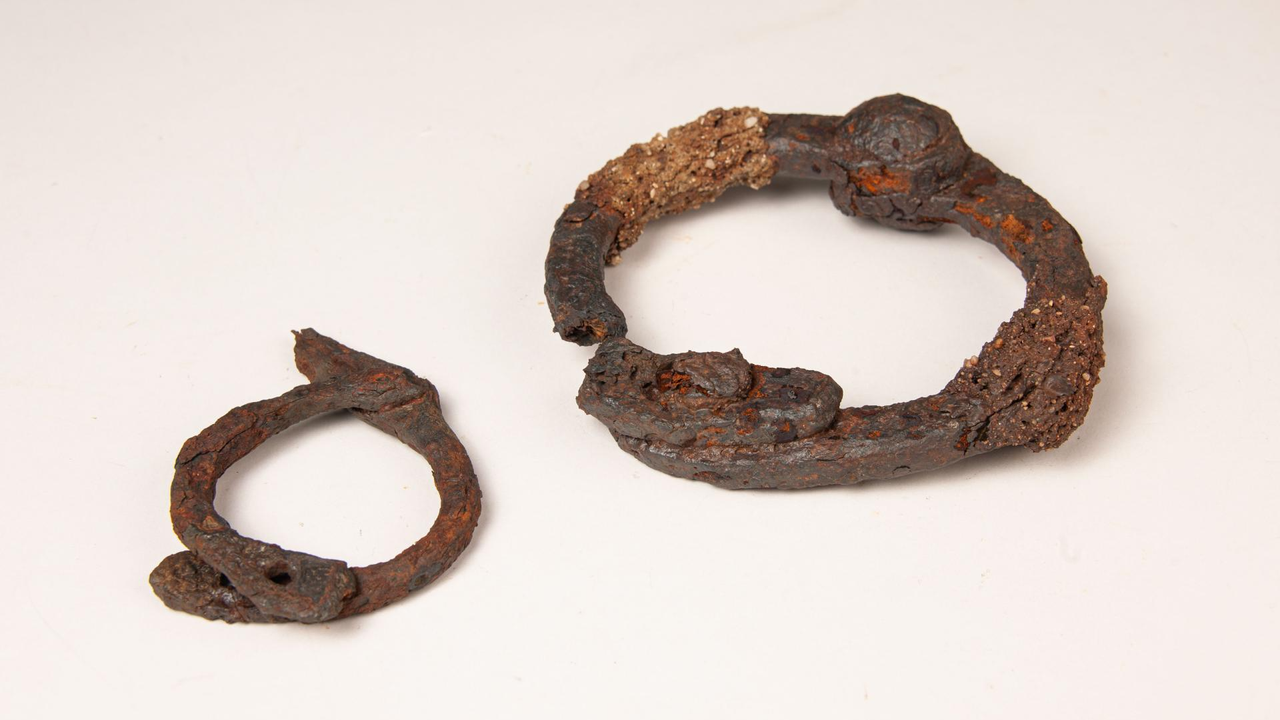
Archaeologists working in France have unearthed five iron shackles dated to approximately 2,300 years ago at a pre-Roman Celtic settlement. The discovery provides rare physical evidence of enslaved people in ancient Celtic societies, a practice archaeologists believe was widespread but rarely documented archaeologically.
The shackles represent exceptional finds. Iron restraints from this period survive infrequently, making this collection noteworthy for understanding Celtic social structures and labor systems. The shackles indicate that Celtic communities engaged in slavery, likely acquiring captives through warfare and trade to serve as forced laborers or commodities.
The location of the settlement remains culturally and geographically significant. Pre-Roman Celtic territories spanned much of Europe, and France contained numerous major Celtic population centers before Roman conquest. Examining how Celtic societies organized labor and bondage offers insight into their economic systems before Roman contact transformed the region.
Archaeological evidence of slavery in ancient Celtic cultures typically remains indirect, manifesting through burial patterns, settlement layouts, or written accounts from Greek and Roman observers. Direct physical evidence like these shackles is uncommon enough that researchers view each discovery as valuable data. The iron itself demonstrates metalworking capability and access to resources required for manufacturing restraint devices.
The findings raise questions about the scale of Celtic slavery and its role in their economies. Some historical evidence suggests Celtic peoples participated actively in slave trading networks, selling captives to Mediterranean markets. These shackles provide tangible proof supporting written historical accounts.
Understanding ancient slavery systems remains archaeologically challenging. Enslaved populations often left minimal traces in the archaeological record because they typically held few possessions, received minimal formal burials, and inhabited areas that survive poorly over time. When physical evidence emerges, as with these shackles, it offers researchers concrete material to study rather than relying solely on written accounts from external observers.
The discovery advances knowledge of Celtic societies during the late Iron