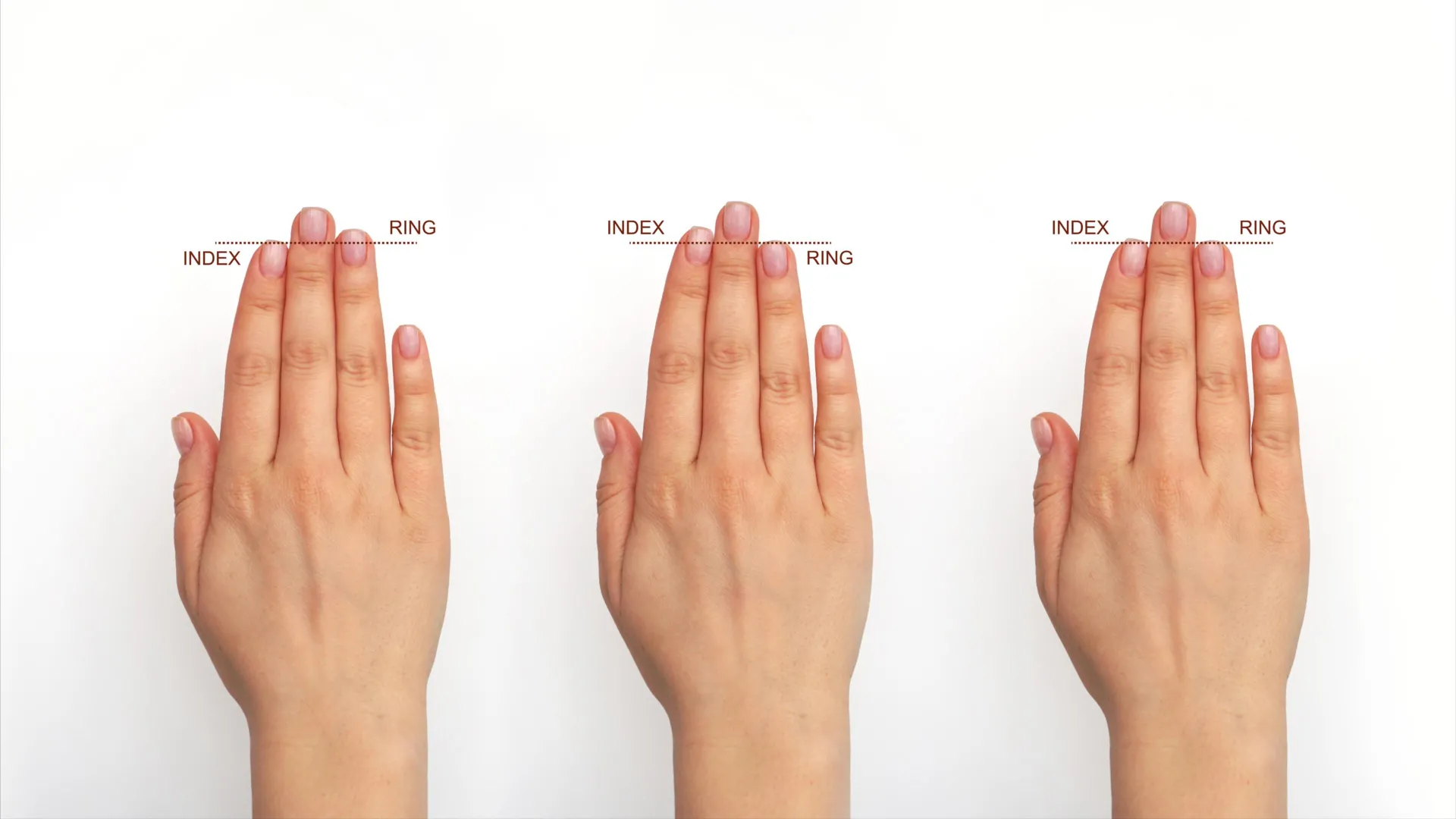
Researchers studying 225 newborns have uncovered a potential link between prenatal estrogen exposure and brain size, with evidence emerging from an unexpected source: finger proportions.
The study found that boys whose finger-length patterns indicated higher exposure to estrogen in the womb tended to have larger head circumferences, a metric closely tied to brain volume. Girls showed no similar correlation.
Scientists measure prenatal estrogen exposure indirectly through the ratio of index finger to ring finger length. Higher estrogen exposure during development typically produces a lower ratio, meaning the ring finger grows longer relative to the index finger. This biological marker reflects hormone levels during a critical window of fetal development.
The research proposes that estrogen may have played an underappreciated role in human brain evolution. Larger brains represent one of humanity's most distinctive traits, yet the hormonal mechanisms driving this expansion remain poorly understood. If prenatal estrogen exposure influenced brain size during human evolution, this could help explain why humans developed such oversized neural structures compared to our primate relatives.
The sex difference in the results proves notable. The connection between finger-length ratios and head circumference appeared only in male subjects, not females. This suggests sex-specific developmental pathways, though the underlying reason requires further investigation. Hormonal sensitivity during fetal development differs between sexes, potentially explaining why estrogen's brain-boosting effects manifested differently.
The findings remain preliminary. Head circumference, while correlated with brain size, does not perfectly measure neural volume. Additionally, the study captured only a snapshot at birth, offering no information about longer-term brain development or whether these initial size differences persist into childhood or adulthood.
Future research must examine whether this correlation holds across diverse populations and whether it actually influences cognitive outcomes. Understanding the hormonal architecture of brain development could illuminate how humans evolved their uniquely large brains and might illuminate developmental disorders affecting