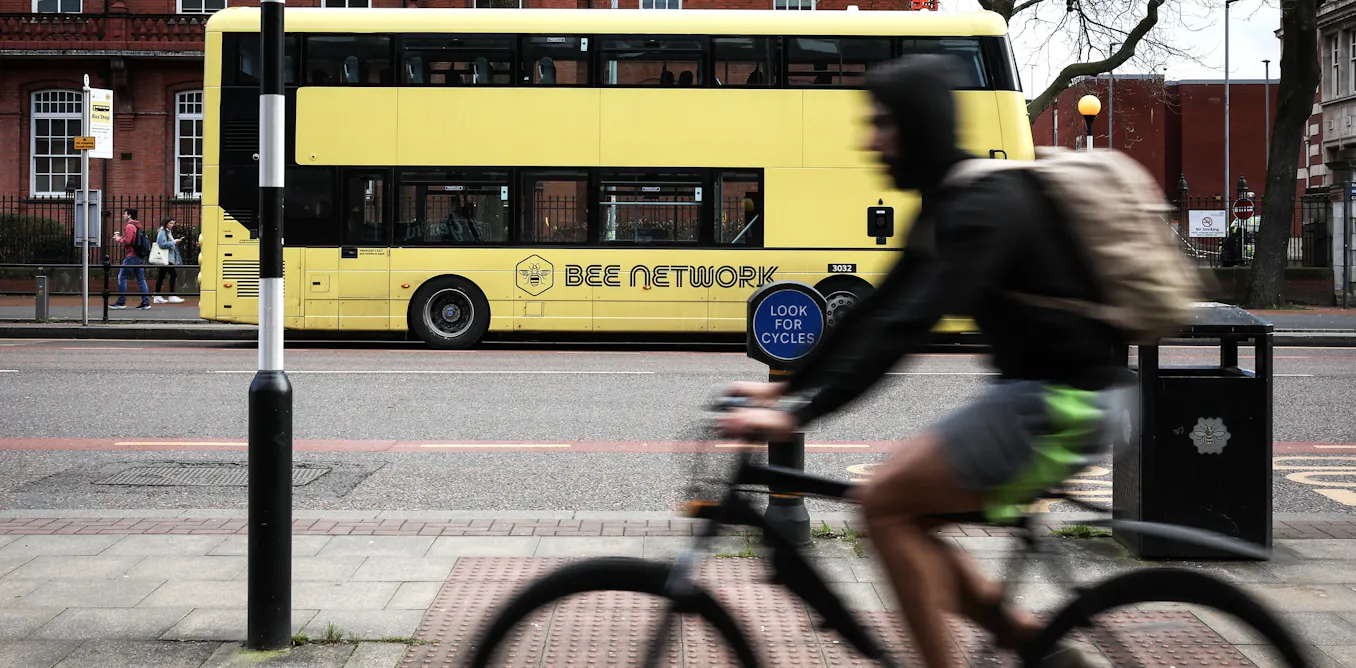
# Manchester's Bee Network: Success and Limitations Beyond the Headlines
Andy Burnham's Bee Network transformed Manchester's bus system into a unified, integrated transit network that earned the former mayor international recognition. The project consolidated multiple operators under one brand, standardized fares, and introduced real-time tracking across routes.
The results impressed observers outside the city. Passenger numbers grew, operational efficiency improved, and the network became a model for other UK cities considering similar reforms. Burnham's transport credentials shaped his political trajectory, helping establish him as a serious voice on infrastructure policy at the national level.
Yet the Bee Network's success tells only part of Manchester's transit story. The expansion occurred largely within central Manchester and affluent surrounding areas. Outer neighborhoods and peripheral communities saw less dramatic improvements, with some routes remaining fragmented and service gaps persisting in less profitable regions.
Funding constraints limited how far the transformation could reach. While the city center benefited from investment and modernization, suburban and rural connections often lagged. Bus operators still prioritized high-demand corridors, leaving some residents with limited alternatives to car travel.
The network also faced criticism from transit advocates who argued that true integration required more aggressive subsidy of outer-area routes. Burnham's approach emphasized operational efficiency and cost recovery, which worked well in dense urban zones but left structural inequities intact in lower-density areas.
Additionally, the Bee Network remained dependent on operational partnerships with private bus companies. This arrangement delivered quick results but preserved existing power dynamics in the transit sector, limiting opportunities for deeper public control or long-term planning independence.
The project demonstrates the power of coordinated transport reform in dense urban environments. However, it illustrates how transport success measured by central metrics can coexist with uneven geographic benefits. Burnham's national reputation as a transport reformer reflects genuine achievement, but applying the Bee Network model to other cities requires acknowled