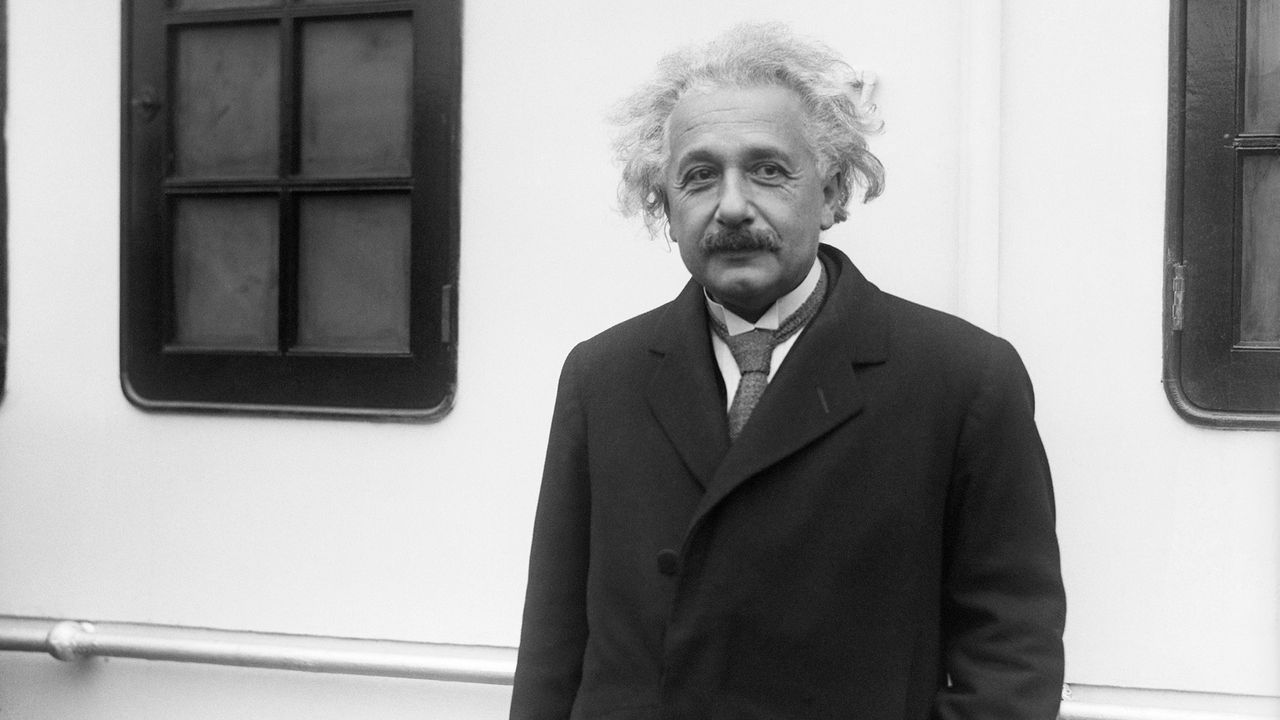
Albert Einstein revolutionized physics with relativity and quantum mechanics, yet he openly acknowledged flaws in his theories. The most famous example involves the cosmological constant, a term he introduced to keep the universe static in his field equations of general relativity.
Einstein later called this addition his "biggest blunder." In the 1920s, observations by Edwin Hubble showed the universe was expanding, making the cosmological constant unnecessary by Einstein's own reasoning. Ironically, decades later astronomers discovered the universe's expansion is accelerating, suggesting Einstein's constant might describe dark energy after all.
Einstein also resisted aspects of quantum mechanics he helped develop. He rejected the probabilistic interpretation championed by Niels Bohr, famously stating "God does not play dice." His thought experiments, like the EPR paradox with Boris Podolsky and Nathan Rosen, challenged quantum entanglement. Experiments have since confirmed that quantum mechanics operates exactly as Bohr predicted, not as Einstein preferred.
The physicist struggled with certain mathematical aspects of his own theories. He initially dismissed gravitational waves as unphysical artifacts, though he later reconsidered. Scientists confirmed their existence in 2015 through LIGO observations, a century after Einstein predicted them in his equations.
Einstein's unified field theory attempts also proved unsuccessful. He spent his final decades pursuing a framework that would merge gravity with electromagnetism, but this work remained incomplete and unconvincing to the broader physics community.
His errors reflected deeper scientific principles. Einstein recognized that theories require validation through experiment. When evidence contradicted his predictions, he adjusted or abandoned positions. This intellectual flexibility, despite his towering reputation, demonstrates how even revolutionary thinkers operate within limits.
Modern physics has transcended Einstein's frameworks while building on them. String theory and quantum gravity represent attempts to resolve contradictions he couldn't. His willingness to admit mistakes set a standard