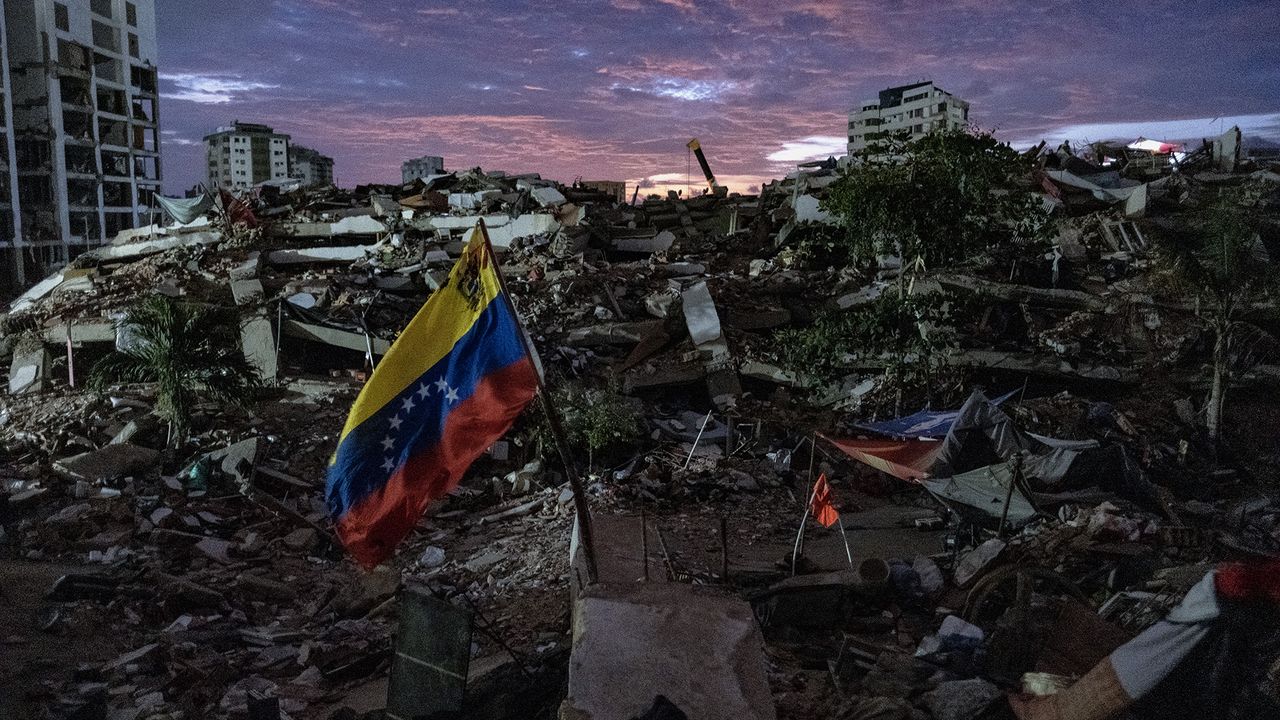
A recent earthquake sequence in Venezuela reveals risks that California's San Andreas Fault system may face.
In 2018, Venezuela experienced what seismologists call an "earthquake doublet": two major earthquakes striking within 13 minutes of each other along different fault segments. The first quake measured magnitude 6.9, followed by a magnitude 6.4 event. The rapid succession caused compounding damage across a wide region, with the second quake triggering additional aftershocks that extended the rupture zone.
Researchers studying this sequence found that the initial earthquake changed stress patterns along adjacent fault segments, essentially priming nearby faults for failure. This cascade effect amplified the overall destructive power compared to what would occur from isolated, unrelated earthquakes. The Venezuelan doublet demonstrated that multi-fault systems can interact in ways current seismic hazard models often underestimate.
The California implications are direct. The San Andreas Fault does not operate in isolation. It connects with numerous subsidiary faults including the San Jacinto, Garlock, and Hayward faults, creating a complex network along active plate boundaries. If a major rupture along the San Andreas triggered failure on an adjacent fault segment within minutes, the combined energy release could exceed damage predictions based on single-fault models.
Seismic hazard assessments typically evaluate faults independently or assume time gaps between ruptures on different segments. The Venezuelan case challenges this assumption. When faults are close enough and properly oriented, stress transfer between segments can initiate nearly simultaneous ruptures. California's densely populated regions near fault intersections face heightened risk if such cascade events occur.
Scientists emphasize this does not mean a California doublet is imminent. Rather, it indicates that probabilistic seismic hazard models used for building codes and emergency planning require refinement to account for multi-fault interactions. Engineers designing critical infrastructure must consider scenarios