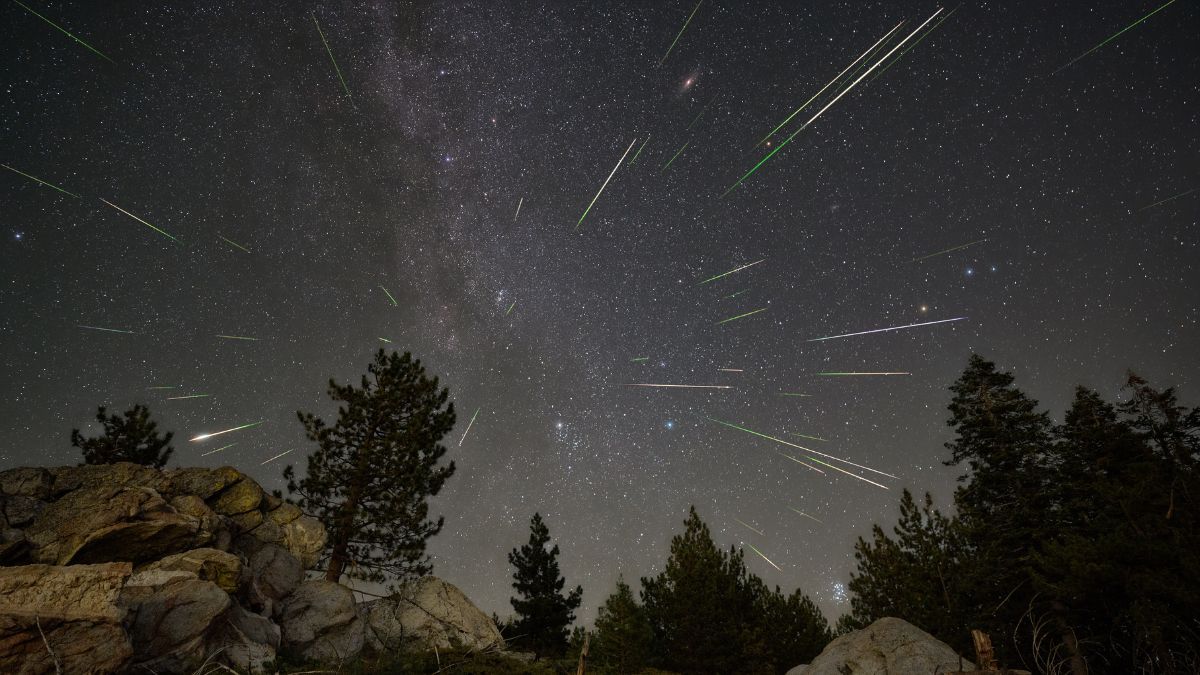
The Perseid meteor shower begins July 17, arriving alongside two additional meteor showers to create abundant opportunities for stargazing throughout July and into August. Observers should expect frequent "shooting stars" across multiple nights during this period.
The Perseid meteor shower results from Earth passing through debris left by Comet Swift-Tuttle. As our planet travels through this dusty trail, particles enter the atmosphere at roughly 132,000 miles per hour. Friction with air molecules heats these fragments to incandescence, creating the bright streaks visible from Earth's surface.
Peak viewing occurs when the radiant point, located in the constellation Perseus, reaches maximum height above the horizon. Under ideal conditions with minimal light pollution, observers can spot dozens of meteors per hour during peak nights. However, moonlight and urban lighting significantly reduce visible meteors, making dark-sky locations preferable.
The timing of the Perseid shower's arrival means overlapping activity from at least two other meteor streams. This convergence extends viewing opportunities beyond the traditional Perseid peak window, allowing observers flexible scheduling across several weeks.
No special equipment is necessary for meteor watching. Naked-eye observation works best, as telescopes and binoculars actually limit the sky area visible at once. Viewers should allow their eyes roughly 20 to 30 minutes to adjust to darkness. Lying on a blanket or reclining chair provides comfortable neck positioning for extended sky observation.
Light pollution remains the primary obstacle for viewers in cities and suburbs. Even small trips away from urban centers noticeably improve visible meteor counts. Websites tracking light pollution levels and clear skies forecasts help observers identify optimal viewing locations and timing.
The Perseids rank among the year's most reliable meteor showers, with consistent activity and reasonable peak rates. This predictability makes them ideal for both experienced observers and casual stargazers new to