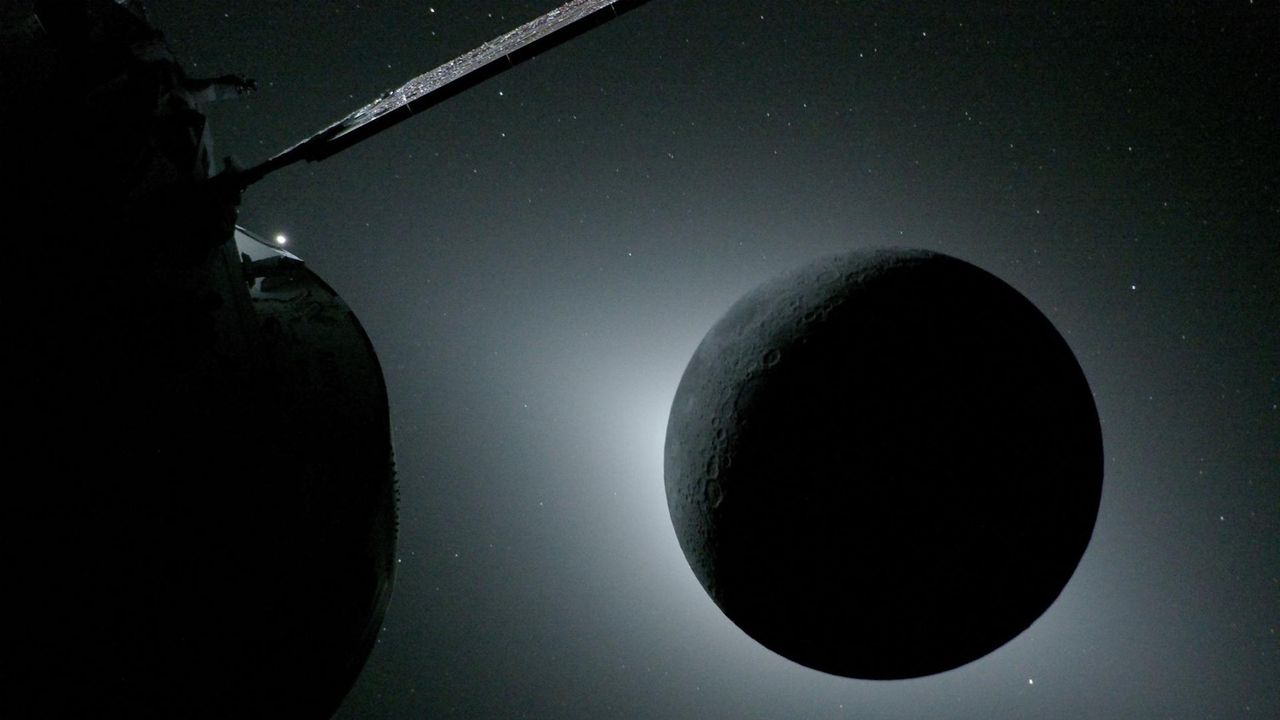
Chris White, lead communications officer for NASA's Artemis II mission, guided the spacecraft through one of spaceflight's most demanding phases from his console at Johnson Space Center in Houston. White monitored real-time telemetry as the uncrewed spacecraft completed a historic lunar flyby at 250,000 miles from Earth, capturing unprecedented photography along the way.
The mission represented NASA's return to lunar exploration after a fifty-year gap. Artemis II flew four test dummies equipped with sensors to measure radiation exposure and acceleration forces that future human crews will experience during the actual crewed Artemis III landing mission. The spacecraft swung around the moon in December 2022, reaching a maximum distance of 268,000 miles from Earth before returning safely to splash down in the Pacific Ocean.
White experienced jarring moments during the flyby when instrument readings and spacecraft behavior diverged from predictions. "The moon looked wrong," White explained, describing the disorientation of monitoring visual data from a quarter-million miles away while spacecraft systems behaved in unexpected ways. These anomalies required rapid troubleshooting from mission controllers who relied on delayed communications and limited direct observation of the spacecraft's status.
The photography captured during the lunar flyby provided NASA engineers with crucial validation data. High-resolution images showed the lunar surface in detail from altitudes that mimicked the trajectories Artemis III will follow. The mission tested critical systems including heat shield performance during reentry, guidance and navigation algorithms, and communication protocols across vast distances.
White's role exemplified the human element essential to modern spaceflight. Automated systems handled routine operations, but unexpected conditions demanded real-time judgment from experienced personnel. The successful completion of Artemis II validated NASA's approach to returning humans to the moon and established confidence in the spacecraft design before committing astronauts to the journey.
Artemis II's smooth execution positioned the Artem