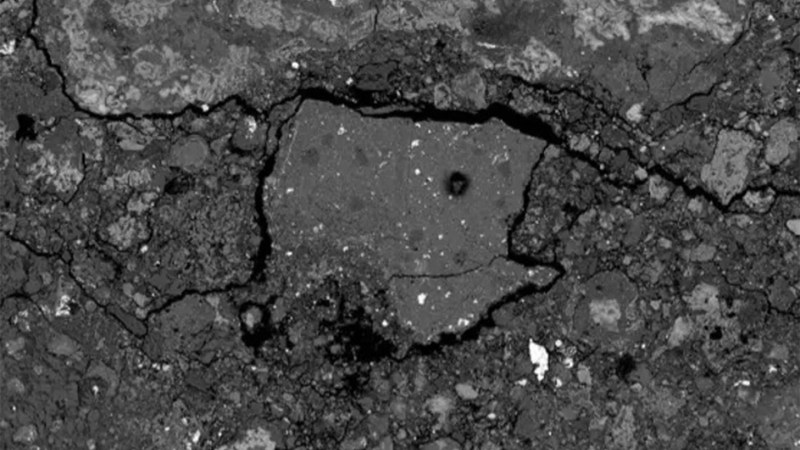
A meteorite that struck a New Jersey roof in 2024 contains amino acids, the building blocks of life, researchers have confirmed. The discovery offers fresh evidence that meteorites could have delivered the chemical ingredients necessary for life to early Earth.
The meteorite, which formed in a brine-rich environment, landed on a residential property and has since become the subject of intense scientific scrutiny. Amino acids detected in the sample suggest that organic compounds can survive the journey through space and withstand impact with planetary atmospheres, lending support to the panspermia hypothesis that life's precursors arrived via cosmic delivery.
Researchers analyzed fragments of the meteorite using spectroscopy and other analytical techniques to identify the amino acids present. The brine-formed composition of the meteorite is notable because it indicates the parent asteroid or comet contained liquid water, an environment that could have fostered chemical reactions producing organic molecules.
This discovery matters for astrobiology because it demonstrates a plausible mechanism for transporting prebiotic chemistry to young planets. Early Earth faced harsh conditions roughly 4 billion years ago, yet life emerged relatively quickly. Meteorite delivery of amino acids and other organic compounds could have jumpstarted biochemistry and accelerated the origin of life.
The 2024 New Jersey meteorite joins a small catalog of meteorites containing amino acids, including the famous Murchison meteorite that fell in Australia in 1969. The Murchison sample revealed over 80 different amino acids, establishing that meteorites carried complex organic inventories to Earth. The New Jersey specimen adds another data point supporting this model.
Limitations remain. Scientists cannot definitively prove these amino acids formed in space rather than through terrestrial contamination after impact, though researchers took precautions to prevent and account for contamination. Additionally, finding amino acids in meteorites does not prove they were the sole source of life's chemical