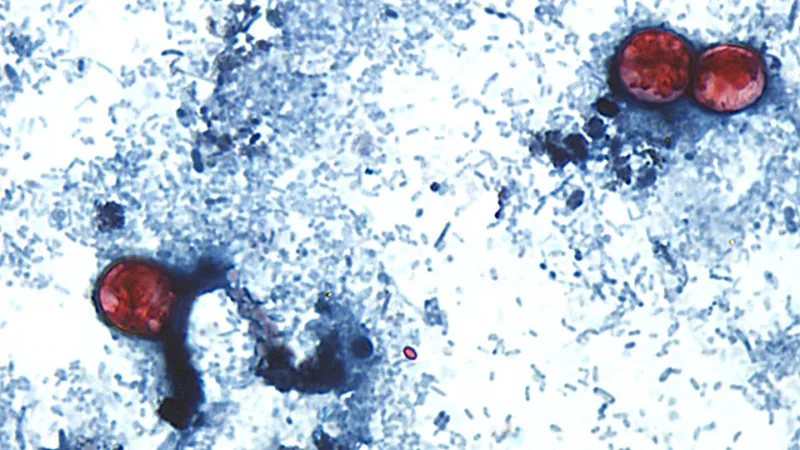
# Inside the Fight Against Cyclospora
Cyclospora cayetanensis, a parasitic protozoan, has triggered waves of severe diarrheal illness across the United States, with health authorities struggling to contain spread through contaminated food supplies. The parasite causes profuse, watery diarrhea lasting up to two weeks and resists standard water treatment methods, complicating public health response.
The organism spreads through fecal-contaminated produce, particularly berries, leafy greens, and imported fruits. Once ingested, the parasite colonizes the small intestine, triggering explosive gastrointestinal symptoms within days. Unlike bacteria amenable to antibiotics, Cyclospora responds only to trimethoprim-sulfamethoxazole, limiting treatment options for patients with sulfa allergies.
Recent outbreaks have affected hundreds across multiple states, straining epidemiological tracking. The parasite's life cycle requires seven to fourteen days of environmental maturation before becoming infectious, making rapid identification of contaminated batches difficult. Food manufacturers and distributors lack real-time detection tools to identify infected products before distribution.
Cyclospora infections spike seasonally in warm months when agricultural activity peaks and produce travels longer distances from farm to consumer. Climate patterns influence outbreak timing and geography. The parasite's resilience stems from thick-walled oocysts, which survive refrigeration, freezing, and standard chlorination used in municipal water systems.
Public health agencies trace outbreaks through coordinated reporting between state health departments and the Centers for Disease Control and Prevention, yet attribution remains challenging. Produce traceability systems remain fragmented across suppliers and retailers, delaying identification of contaminated sources.
Prevention relies on washing produce thoroughly, though Cyclospora oocysts resist mechanical removal. Vulnerable populations, including immunocompromised individuals and pregnant women, face