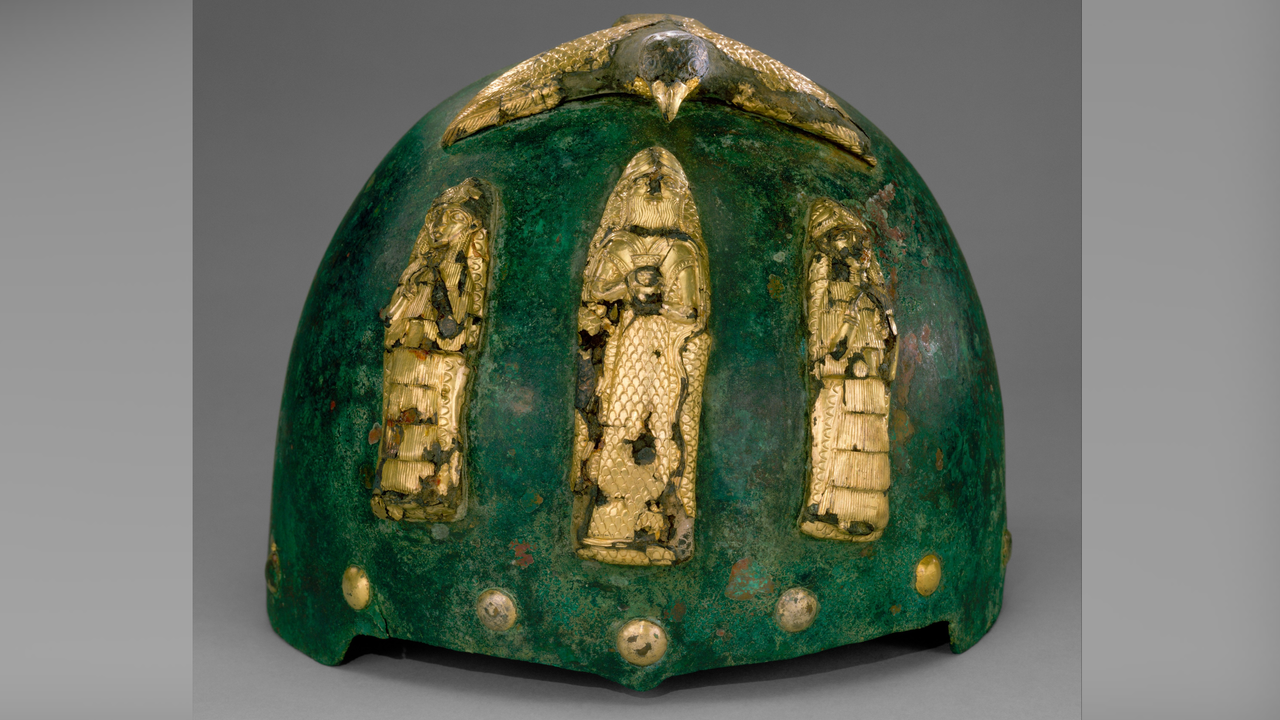
Archaeologists have identified a 3,500-year-old bronze helmet from ancient Elamite civilization featuring intricate depictions of divine figures and a raptor. The artifact represents a remarkable example of metalworking craftsmanship and religious iconography from the pre-Persian Iranian plateau.
The helmet displays gold-plated gods alongside a raptor motif, reflecting the spiritual beliefs and artistic sophistication of Elamite warrior culture. Elamite civilization flourished in what is now southwestern Iran during the Bronze Age, centuries before the Persian Empire dominated the region. The kingdom maintained its own distinct artistic traditions and theological systems independent of later Persian influence.
The craftsmanship evident in the helmet demonstrates advanced bronze-working techniques combined with gilding processes. Artisans achieved fine detail in depicting the divine figures and the raptor, suggesting both technical mastery and the resources available to elite warriors. The choice to adorn a functional military object with elaborate religious imagery indicates that Elamite kings used armor as a medium for displaying piety and power simultaneously.
Raptors held particular significance in ancient Near Eastern religions, often symbolizing divine protection, warfare prowess, and celestial authority. The inclusion of multiple deities in gold plating suggests this helmet belonged to a ruler of substantial rank, someone whose social position warranted such labor-intensive decoration.
The artifact provides insights into Elamite religious practices, metallurgical capabilities, and the role of kings in their society. Such ceremonial armor pieces served practical protective functions while operating as portable religious statements. The helmet enriches our understanding of a civilization that occupied a critical geographic and cultural position between Mesopotamia and the Indian subcontinent.
This discovery adds to a growing body of evidence about Elamite material culture and demonstrates how ancient peoples integrated spirituality with everyday objects, particularly those associated with warfare and rulership. The piece exemplifies the sophisticated