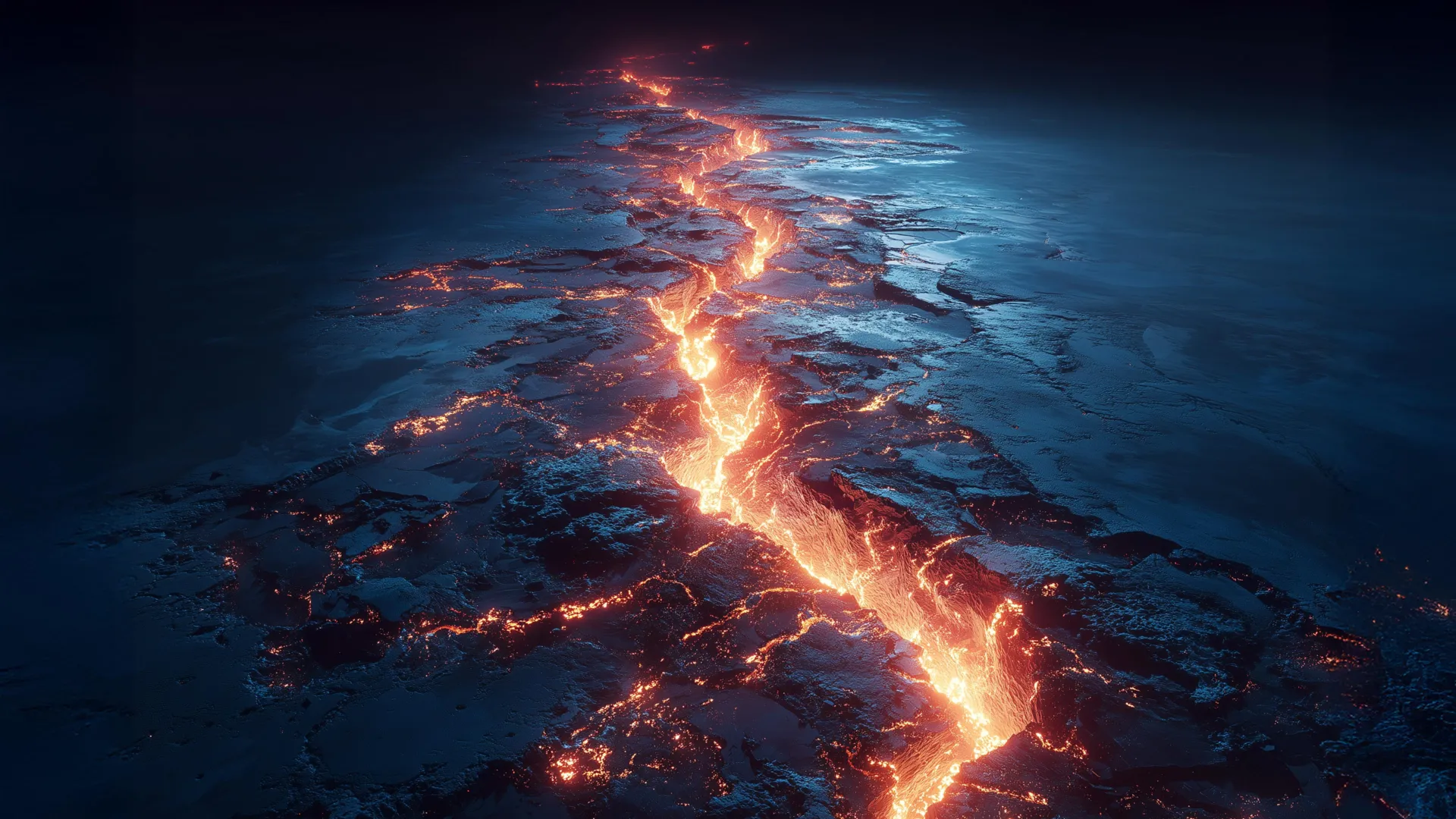
A massive volcanic eruption event that occurred over 100 million years ago fundamentally restructured an entire oceanic plate, according to seismic analysis of the Ontong Java Plateau.
Researchers using seismic wave data discovered that the volcanic activity created a distinctive internal architecture within the oceanic plate. The structure consists of horizontal layers intersected by enormous vertical channels through which magma rose from Earth's interior. The findings reveal that the eruption did more than simply deposit volcanic material. Instead, the rising magma chemically transformed the plate composition itself.
The research team detected unusually slow seismic wave velocities within the plateau. These reduced wave speeds indicate that the ascending magma altered the chemical and mineral composition of the surrounding rock. The combination of vertical magma conduits and horizontal layering creates a complex geometry that differs markedly from typical oceanic crust.
The Ontong Java Plateau ranks as one of Earth's largest oceanic igneous provinces. The event that created it represented an extraordinary outpouring of magma, making it one of the most significant volcanic episodes in planetary history. The plateau now occupies an area beneath the western Pacific Ocean near the Solomon Islands.
This discovery advances understanding of how major plume-related volcanism shapes oceanic lithosphere at a fundamental level. Rather than simple cooling and solidification of magma, the research shows that large-scale volcanic systems can reorganize the internal structure and composition of entire crustal plates. The findings have implications for interpreting the geological history of other oceanic plateaus worldwide.
The research team extracted information from seismic waves that propagated through the plateau, measuring how wave speeds changed at different depths and locations. This approach allowed scientists to construct a detailed three-dimensional image of the internal structure without drilling or sampling. The results demonstrate how seismic tomography can reveal processes that occurred tens of millions of years in the past.
CATEGORY