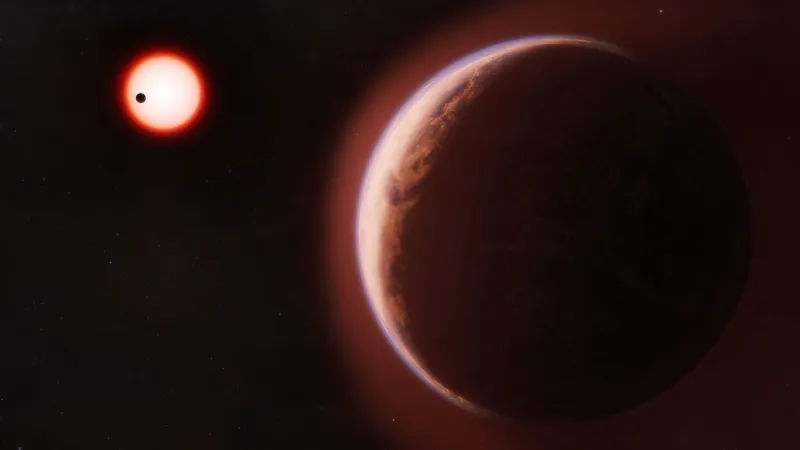
Astronomers detected a helium atmosphere surrounding a rocky exoplanet, marking a rare discovery that expands the search for potentially habitable worlds beyond our solar system.
The finding challenges conventional expectations about planetary composition. Rocky planets typically lose their atmospheres over time, particularly lighter elements like helium. This exoplanet retained its helium envelope despite its small size and proximity to its star, conditions that usually cause atmospheric escape.
Researchers identified the atmosphere using spectroscopic analysis, which measures how starlight filters through the planet's upper layers. The helium signature appeared distinct in the data, confirming the planet maintains a substantial atmosphere despite intense stellar radiation.
The discovery matters because it demonstrates that rocky planets can sustain atmospheres longer than previously assumed. Most known exoplanets fall into two categories: small, airless rocky worlds or massive gas giants. This world occupies middle ground, suggesting a broader range of planetary types exists than current models predict.
The exoplanet orbits close to its star, placing it in what astronomers call the "hot rocky planet" category. Its helium atmosphere likely originated from the star's radiation stripping hydrogen from water or other hydrogen-rich compounds, leaving helium behind. This process reveals new mechanisms for atmospheric retention and modification.
Finding rocky planets with atmospheres increases the pool of candidates for studying potential biosignatures, the chemical markers of life. A thick helium atmosphere would not support life as we know it, but the mechanism that preserved this atmosphere might also protect other atmospheres containing more life-friendly gases like oxygen or methane.
The research team employed ground-based telescopes to make the observations, avoiding the need for costly space missions to catalog atmospheric compositions. This accessibility could accelerate future discoveries as astronomers scan more exoplanets systematically.
The team described the world as an "exotic weirdo" in their research communications, reflecting its unexpected atmospheric properties