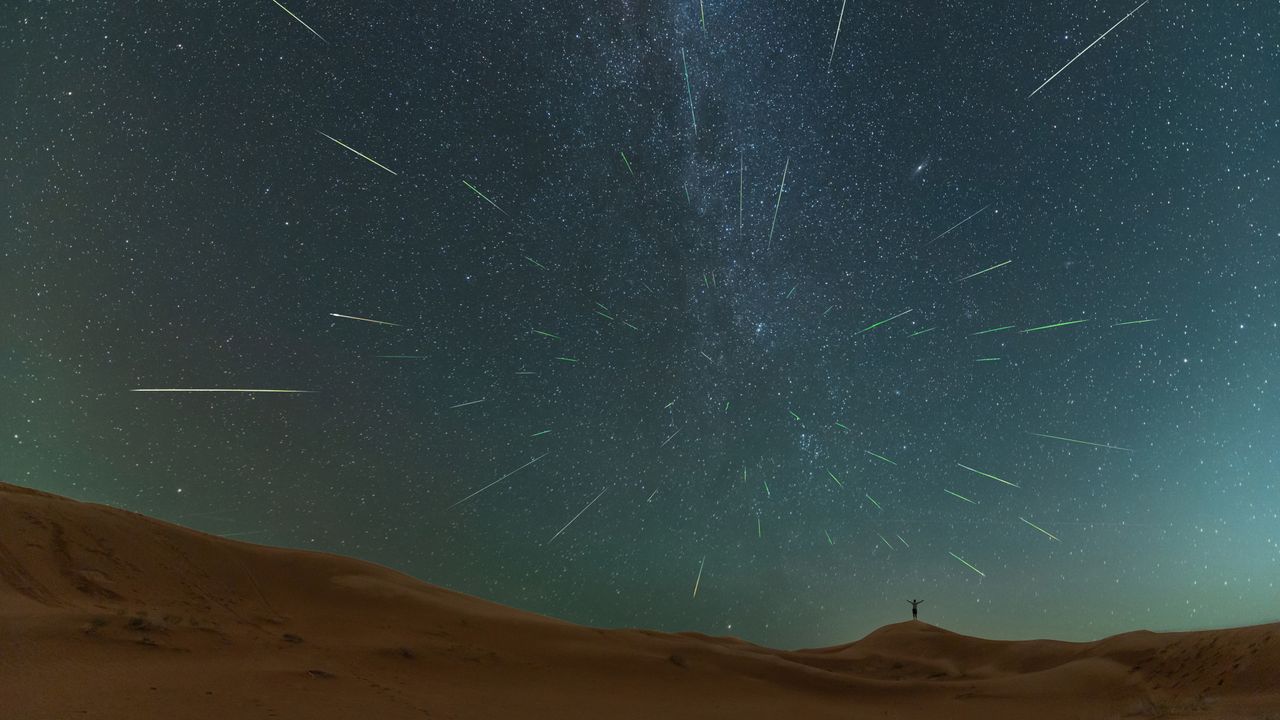
The Perseid meteor shower reaches peak activity August 12-13, 2026, coinciding with a total solar eclipse. This rare alignment offers observers a double celestial event in a single night.
The Perseids occur annually when Earth passes through debris left by Comet Swift-Tuttle. Particles enter the atmosphere at roughly 132,000 miles per hour, burning up and creating the characteristic streaks of light. The shower typically produces 50 to 100 meteors per hour at peak activity, though actual counts vary based on viewing conditions and light pollution.
The 2026 timing proves exceptional. The total solar eclipse path crosses North America, Europe, and Africa during the same period as the Perseids' peak. Eclipse observers in the path of totality will experience darkness ideal for spotting fainter meteors. Those outside the eclipse path can still observe the shower from anywhere with clear skies and minimal light pollution.
Viewing conditions require patience. Observers should allow 20 to 30 minutes for eyes to adjust to darkness. The shower radiates from the constellation Perseus, positioned in the northeastern sky during late evening and early morning hours. No equipment is necessary. Binoculars and telescopes actually hinder viewing since meteors move too quickly to track. Simply find a dark location away from city lights, lie back, and scan the sky.
Peak nights typically offer the best displays, but the Perseids remain active for several weeks before and after August 12-13. Clear weather ultimately determines success more than any other factor. Cloudy nights require shifting observation dates or locations.
The 2026 convergence of eclipse and meteor shower represents an uncommon astronomical occurrence. Comet Swift-Tuttle returns every 133 years, with its last passage in 1992. The next return comes in 2125. This particular pa