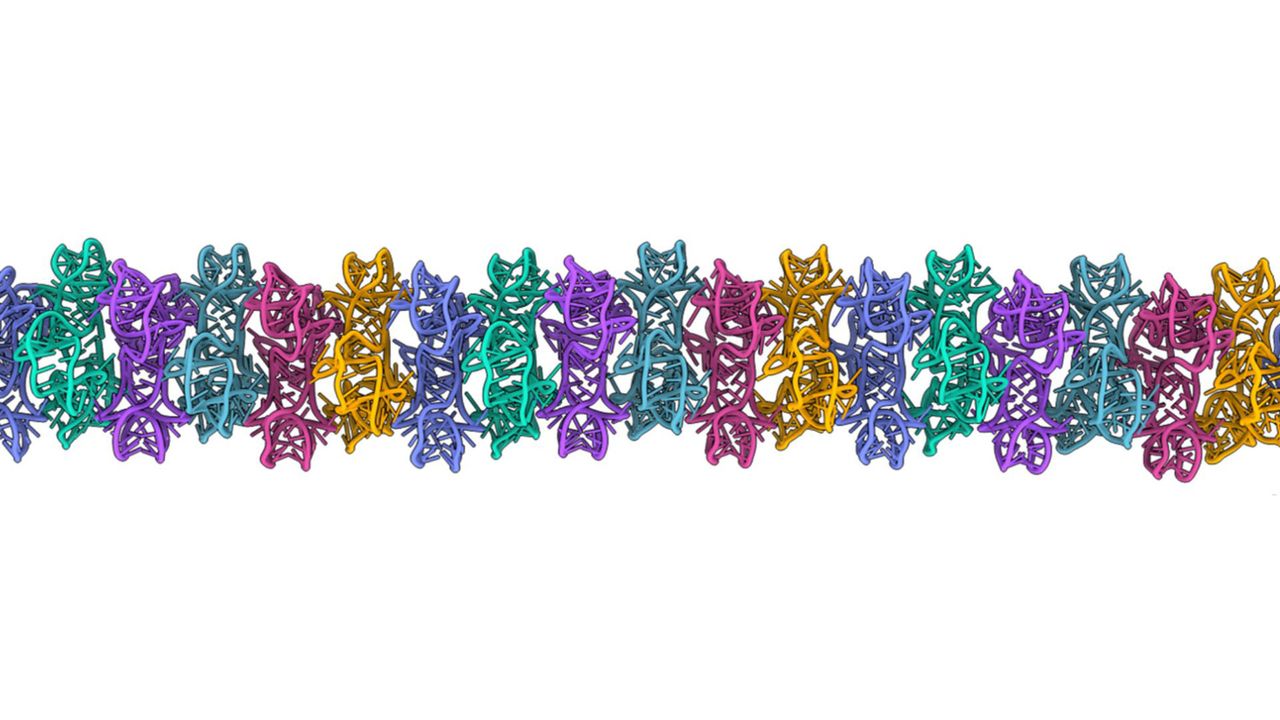
Researchers have discovered that RNA molecules can fold into more complex three-dimensional structures than previously understood, challenging long-held assumptions about the molecular machinery of early life.
The finding reshapes thinking about the RNA world hypothesis, the prevailing scientific theory that RNA, not DNA, served as both the genetic material and the primary catalyst for chemical reactions during life's origins billions of years ago. Scientists have long believed RNA's capabilities were limited compared to proteins, but this new work expands that view considerably.
RNA's ability to fold into intricate shapes determines its functional capacity. The more complex the folding, the more specialized tasks the molecule can perform. Prior research established certain RNA folding patterns, but this study reveals configurations that fall outside those previously mapped boundaries. The discovery suggests RNA possessed greater chemical versatility during early Earth conditions than the field had credited.
This work has direct implications for understanding prebiotic chemistry, the chemical processes that preceded biological life. If RNA could execute more diverse functions through novel folding patterns, it becomes more plausible that RNA alone could have catalyzed the diverse reactions necessary for life's emergence. The molecule's expanded structural repertoire strengthens the case for RNA as life's original molecular innovator.
The research also raises questions about evolution's earliest chapters. If RNA possessed hidden structural capacities, primitive replicating systems may have gained functional complexity faster than models currently predict. This could compress the timeline for how rapidly life became chemically sophisticated.
However, the study presents limitations. Laboratory conditions that stabilize these novel RNA structures may not have existed on early Earth. Researchers must determine whether the conditions necessary to generate and maintain these complex folds would have been present in ancient oceans or hydrothermal vents where life likely emerged. Temperature, pH, and chemical composition all influence RNA folding.
The findings open new experimental avenues. Scientists can now test whether these newly discovered RNA structures could perform the metabolic tasks