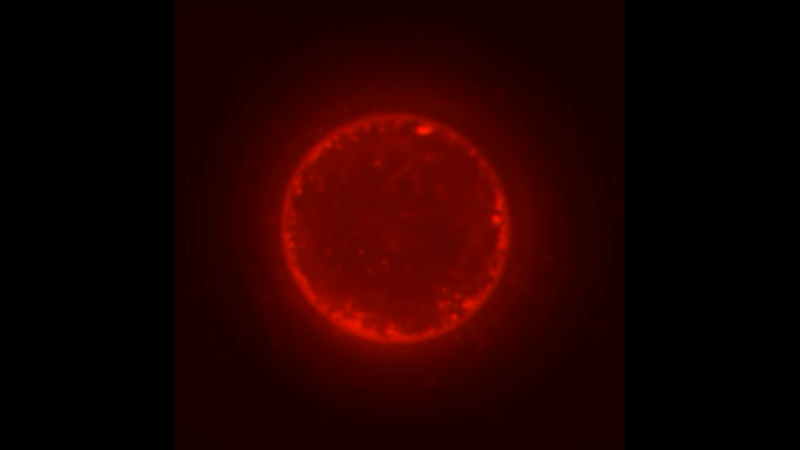
# Lab-Made Cells Mark Progress Toward Synthetic Life, Though They Fall Short of Being Alive
Researchers have created artificial cells from scratch that perform some lifelike functions, but they remain fundamentally different from living organisms. The lab-constructed cells, dubbed SpudCells, demonstrate how scientists are inching toward understanding what constitutes life itself.
SpudCells incorporate basic cellular machinery without meeting the criteria for true life. They metabolize nutrients, respond to environmental changes, and maintain internal structures similar to biological cells. However, they lack self-replication, heredity, and the ability to evolve. These missing pieces place them firmly in the category of sophisticated chemical systems rather than living entities.
The research represents a methodological breakthrough in synthetic biology. By constructing cells from component parts—lipids, proteins, and genetic material—scientists gain insight into life's minimal requirements. This approach differs from modifying existing organisms or simulating life computationally. Instead, researchers physically assemble the pieces necessary for cellular behavior.
The significance extends beyond academic curiosity. Understanding synthetic cell construction could lead to practical applications. Engineered cells might produce medicines, break down pollutants, or manufacture materials currently derived from petroleum. They could also serve as platforms for studying how life emerged from nonliving chemistry billions of years ago.
However, substantial obstacles remain before scientists create synthetic organisms. Current SpudCells require constant environmental control and external energy inputs that living cells generate themselves. They cannot reproduce autonomously or pass genetic information to offspring. Bridging this gap demands solving problems in synthetic chemistry, molecular engineering, and systems biology.
The work highlights a fundamental question: where lies the boundary between chemistry and life. Researchers increasingly recognize that life exists on a spectrum rather than as a binary state. SpudCells occupy an intermediate zone, performing biological functions without possessing biological properties. This ambiguity drives ongoing debate about how