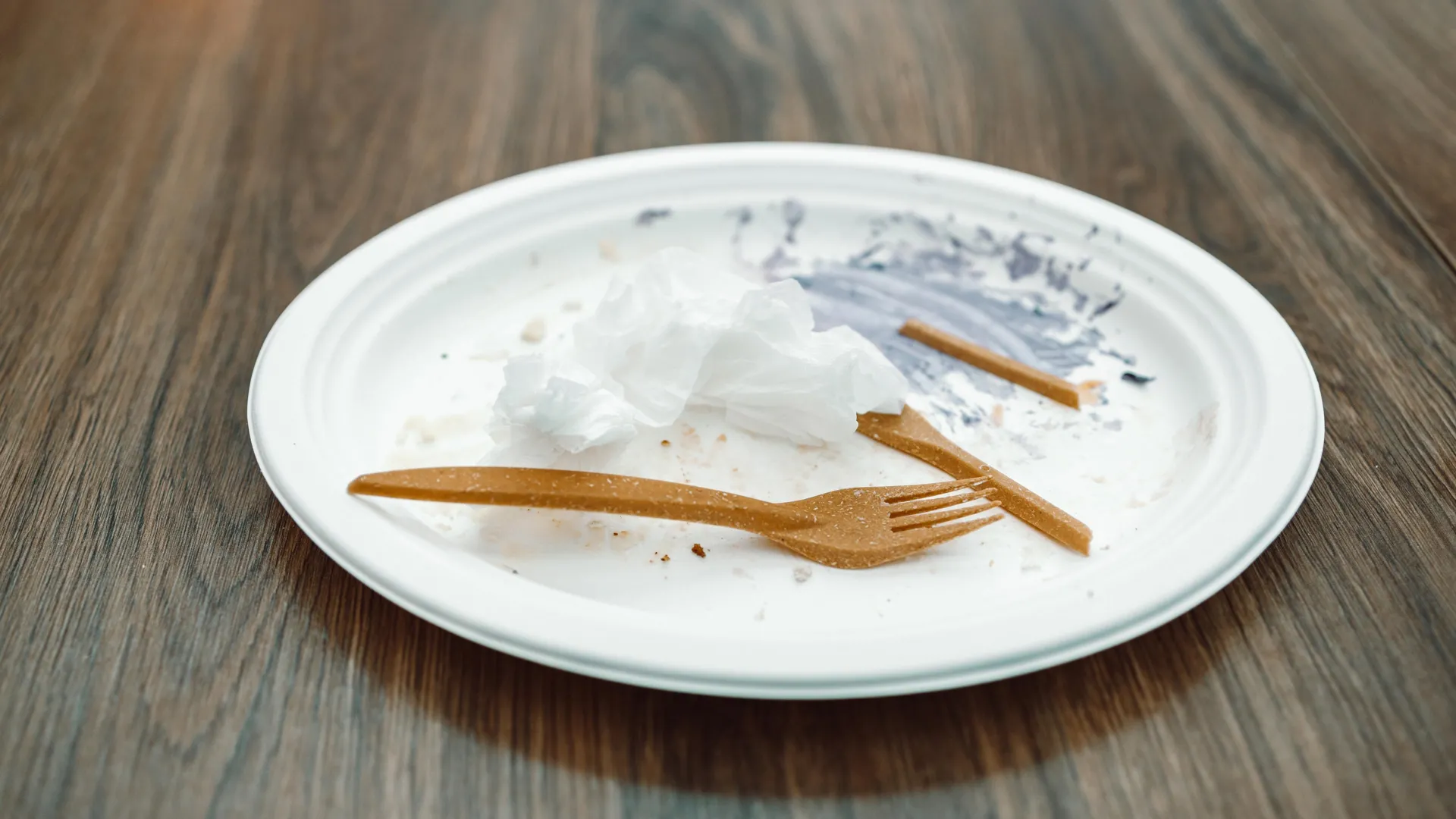
Researchers have engineered a self-destructing plastic that leverages bacteria to achieve complete degradation in six days, leaving no microplastics behind. This development addresses a persistent challenge in waste management, where conventional plastics persist for centuries and fragment into harmful microplastics during decomposition.
The material, called "living plastic," incorporates engineered bacterial cells into a biopolymer matrix. When activated, these microorganisms systematically break down the plastic structure into harmless compounds. The six-day degradation timeline represents a dramatic acceleration compared to conventional plastics, which can take decades or longer to decompose.
Unlike traditional biodegradable plastics that fragment into microplastics, this living plastic completely disintegrates at the molecular level. The engineered bacteria consume the polymer chains, converting them into water, carbon dioxide, and biomass. This process eliminates the microplastic pollution problem that plagues ocean ecosystems and wildlife.
The research team, whose specific names and affiliated institutions remain undisclosed in available reports, has demonstrated the technology's feasibility in laboratory conditions. The material shows promise for applications in packaging, textiles, and other single-use items where waste accumulation poses environmental threats.
However, several limitations warrant consideration. The technology currently requires controlled activation conditions to trigger bacterial degradation, meaning careful waste management protocols would be necessary to prevent premature breakdown during storage and distribution. Scaling production of the engineered bacteria and ensuring cost-competitive manufacturing remain open questions. Additionally, the research has not yet addressed performance characteristics like tensile strength, barrier properties, or thermal stability compared to conventional plastics, factors essential for practical commercial application.
Field testing and long-term environmental studies would be needed before deployment. Researchers must also examine whether escaped engineered bacteria could impact natural ecosystems or compete with native microorganisms.
The development represents a promising step toward addressing plastic waste, but the gap between