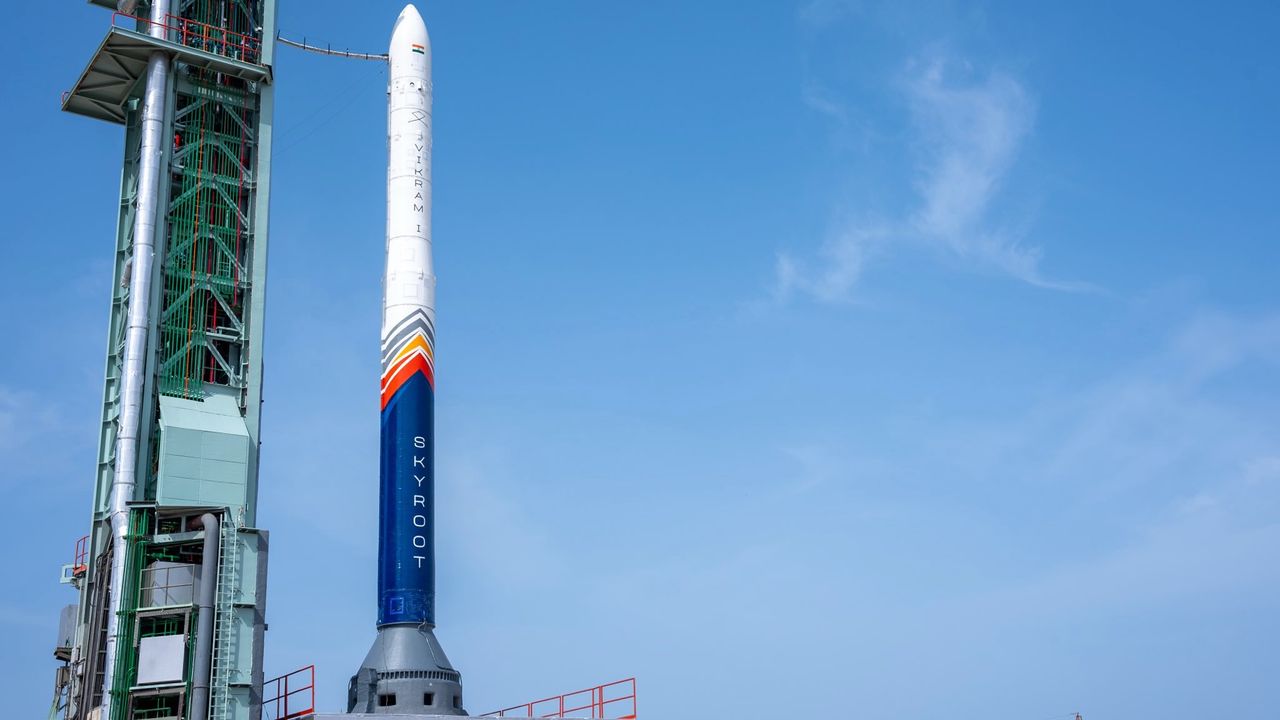
Skyroot Aerospace will attempt to launch Vikram-1, India's first privately developed orbital rocket, early on July 18. The launch represents a milestone for India's commercial space sector, marking the country's entry into private spaceflight operations.
Vikram-1 aims to reach orbital velocity, a feat that would establish Skyroot Aerospace as a functional launch provider in a competitive global market. India's space industry has historically centered on government operations through the Indian Space Research Organisation (ISRO). The emergence of private competitors signals a shift toward commercial space development in the world's fifth-largest economy.
The rocket's name references Vikram Lander, ISRO's lunar spacecraft that attempted a soft landing on the Moon's south pole in 2019. The naming choice connects India's private venture to its established space heritage.
Skyroot Aerospace, founded in 2018, developed Vikram-1 as a medium-lift launch vehicle designed to carry small satellites into orbit. The company joins a growing roster of Indian space startups pursuing government contracts and international launch services.
The timing of this launch reflects broader global trends. SpaceX demonstrated the viability of private orbital rockets with Falcon 1 in 2008. Companies like Rocket Lab, Axiom Space, and others have since proven that commercial launch providers can operate reliably. India's government has actively encouraged private participation in its space sector through regulatory frameworks and commercial contracts.
Success carries implications beyond business. A successful Vikram-1 flight would validate India's regulatory approach and potentially attract investment in domestic space technology. Failure would delay commercial operations but would not fundamentally alter India's space ambitions.
The launch window opens early Saturday morning, with coverage available through multiple platforms. Observers of space commerce will watch closely as Skyroot Aerospace attempts to accomplish what only government agencies have managed in India so