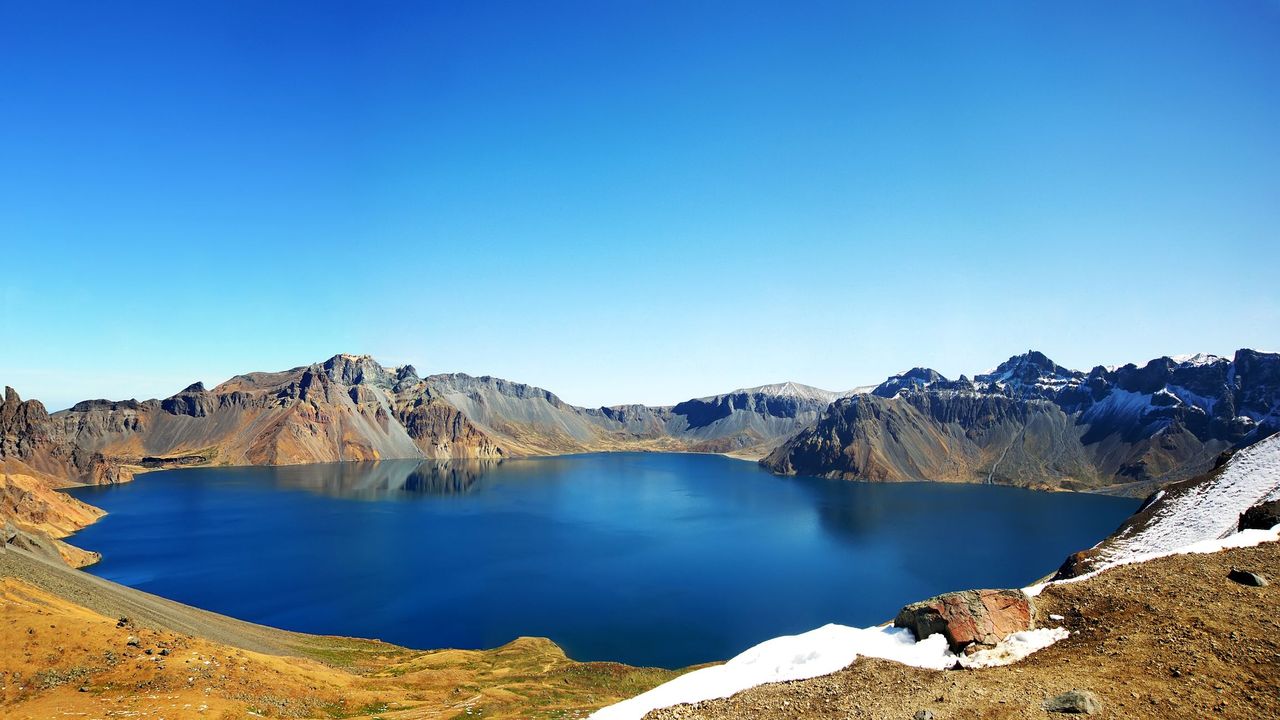
Heaven Lake, perched 7,200 feet above sea level, represents a geological marvel that straddles the China-North Korea border. The lake sits atop a colossal volcano and functions as the deepest lake in China while simultaneously holding the distinction of being the highest and largest crater lake in Northeast Asia.
The lake's extreme elevation and volcanic origins give it exceptional geological significance. Crater lakes form when volcanic calderas fill with water after eruption ceases, creating isolated aquatic ecosystems shaped by their unique geological settings. Heaven Lake's depth, combined with its high altitude and volcanic substrate, likely creates distinctive water chemistry and ecological conditions that differ markedly from lowland lakes.
The political geography of Heaven Lake adds another layer of complexity to its scientific interest. The border arrangement means most of the lake belongs to North Korea, while China controls a smaller portion. This territorial division has historically complicated scientific research and resource management efforts. International cooperation on studying the lake remains limited due to geopolitical tensions and restricted access to North Korean territory.
The volcano underlying Heaven Lake represents an active geological feature that warrants continued monitoring. Understanding volcanic systems in this region helps scientists assess potential hazards and predict future activity. The lake itself serves as a natural laboratory for studying how volcanic activity influences water systems and the organisms that inhabit them.
Climate and environmental changes pose additional research questions for Heaven Lake. At such high altitude, the lake experiences distinct seasonal patterns and temperature variations that affect ice formation and melt cycles. These conditions make the lake relevant to studies examining how alpine and subpolar aquatic ecosystems respond to broader environmental shifts.
Heaven Lake demonstrates how geography, geology, and politics intersect around natural features. Its status as China's deepest lake and Northeast Asia's largest crater lake makes it worthy of scientific attention, even as access restrictions and border complications limit the extent of international research that takes place there.