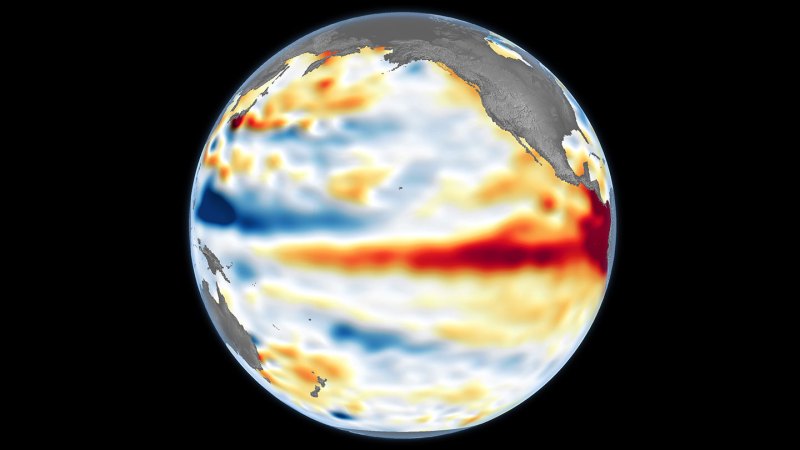
Researchers modeled whether marine cloud brightening could dampen El Niño's intensity by cooling specific regions of the Pacific Ocean. The technique involves spraying salt particles into low-lying clouds to increase their reflectivity, bouncing more sunlight back to space.
Computer simulations conducted by climate scientists suggest that strategically brightening clouds near the equator could reduce sea surface temperatures in the eastern Pacific. This cooling effect, they found, weakens the atmospheric circulation patterns that drive El Niño episodes. During strong El Niño events, warming ocean temperatures disrupt weather worldwide, triggering droughts, floods, and agricultural losses across multiple continents.
The modeling work demonstrates proof-of-concept for the approach. By targeting cloud brightening in specific zones, researchers estimate the technique could reduce El Niño intensity by 20 to 30 percent in simulations. The findings suggest geoengineering interventions tailored to particular climate patterns might offer localized benefits.
However, substantial uncertainties remain. Marine cloud brightening has never been deployed at operational scales. Real-world effects could diverge sharply from model predictions because clouds respond to multiple atmospheric variables that simulations simplify. Unintended consequences pose another concern. Modifying precipitation patterns in one ocean region could shift rainfall elsewhere, affecting monsoons or agricultural productivity in distant countries. The governance questions loom equally large. No international framework currently exists for regulating such interventions, and deploying them unilaterally raises ethical and legal complications.
Scientists emphasize that cloud brightening cannot replace emissions reductions. The technique addresses symptoms rather than causes of climate change. As greenhouse gas concentrations continue rising, maintaining the cooling effect would require continuous intervention. Additionally, some climate models show that marine cloud brightening might produce regional winners and losers, creating distributional conflicts between nations.
The research appears relevant as extreme El Niño events grow more frequent