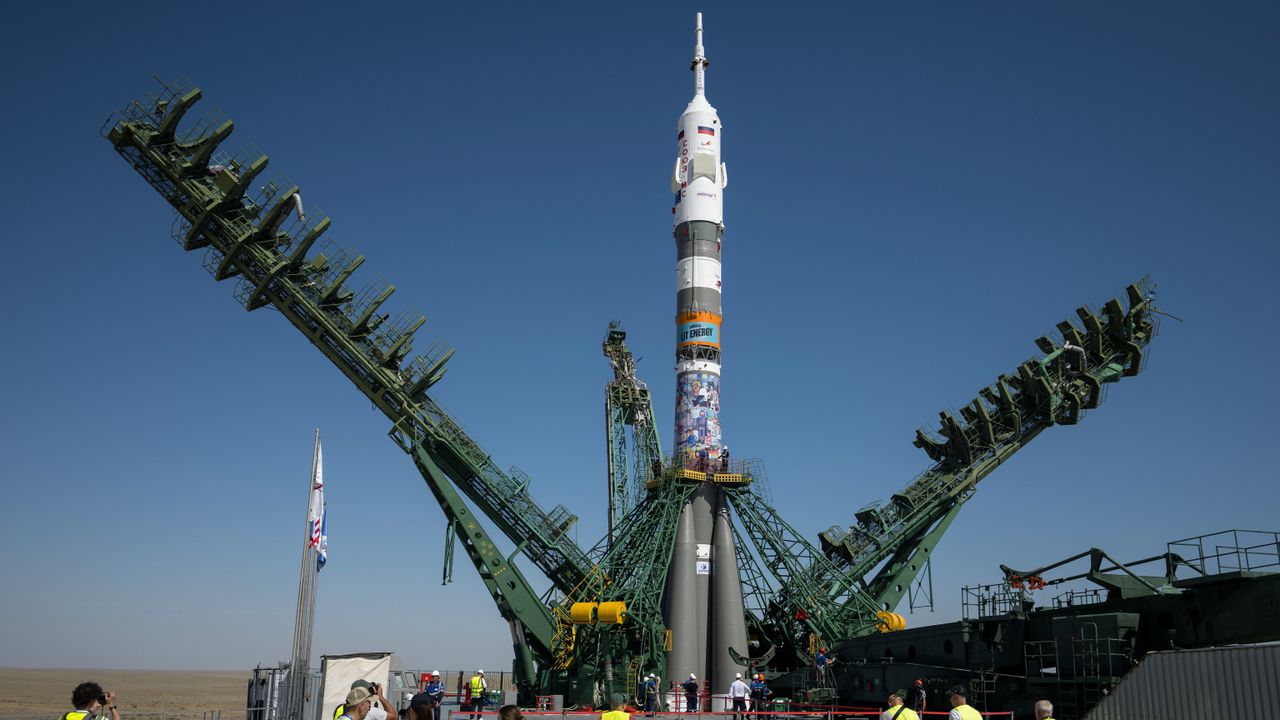
Russia launched three astronauts to the International Space Station this week aboard a Soyuz rocket decorated with an advertisement for an energy drink. The move marks the latest chapter in Russia's history of commercializing space hardware, a practice that began decades ago and continues despite geopolitical tensions.
The branding on the rocket reflects Russia's strategy of generating revenue through space advertising. Roscosmos, the Russian space agency, has monetized launches before. In 1999, a Soyuz rocket carried a Pizza Hut logo to orbit. More recently, the agency sold naming rights and advertising space on rockets as a way to offset costs and generate income for its space program.
This particular launch demonstrates that Russia maintains its willingness to pursue commercial partnerships even as international sanctions and political isolation have strained its space sector. The practice exists in a gray area of space law. The Outer Space Treaty of 1967 prohibits national appropriation of celestial bodies but does not explicitly ban commercial advertising on launch vehicles themselves.
Space agencies worldwide have experimented with advertising. NASA has allowed corporate logos on rockets and spacecraft components, though typically more subtly than Russia's approach. The difference reflects different philosophies about the commercialization of space exploration.
Russia's energy drink partnership suggests the agency plans additional branded launches. Experts note that while the practice may seem unusual, it provides a legitimate funding stream for expensive spaceflight operations. The Soyuz remains one of the world's most reliable human spaceflight systems, and advertising revenue helps sustain that reliability.
The move also highlights broader trends in space industry financing. As traditional government budgets face constraints, space agencies increasingly seek private funding and partnerships. Some view this as pragmatic adaptation. Others see it as commodifying humanity's shared frontier.
The astronauts aboard this week's launch were unaffected by the advertising on their rocket. Their mission focuses on conducting