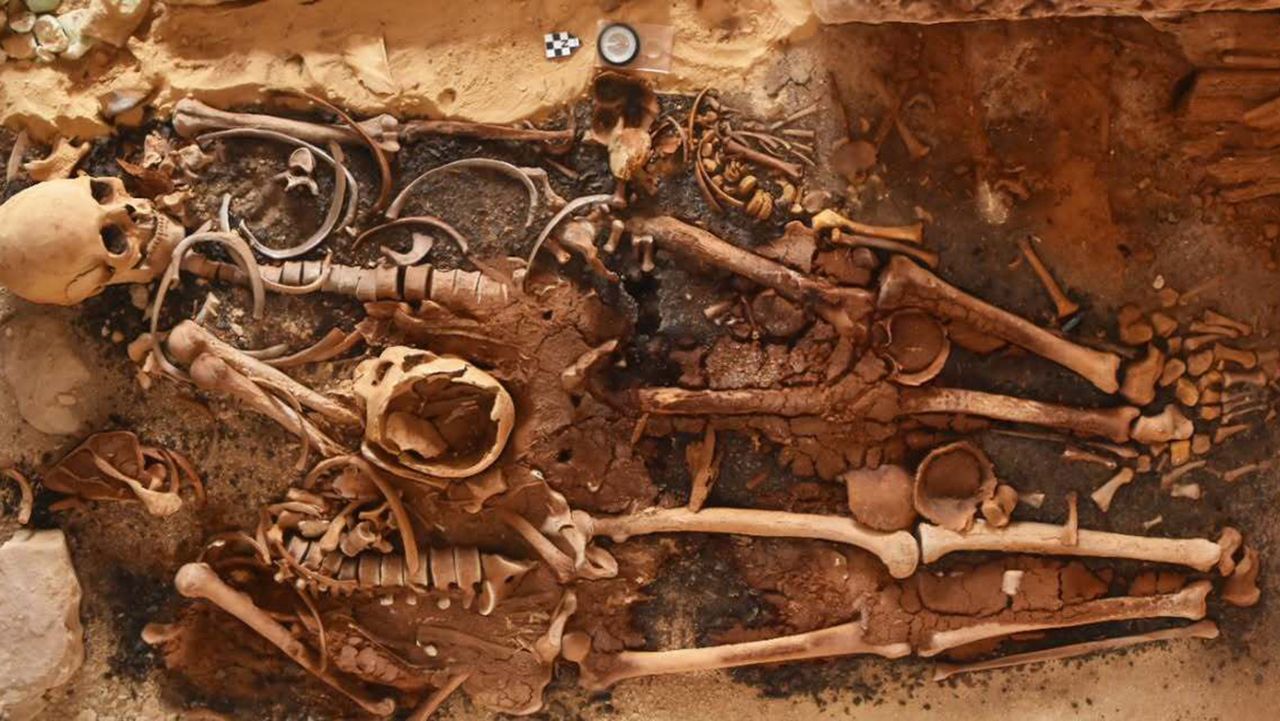
Archaeologists excavating along Egypt's Mediterranean coast have uncovered 18 ancient Egyptian tombs containing dozens of gold "tongues" and other precious artifacts. The discovery, reported by Live Science, represents a significant find for understanding burial practices in Greco-Roman Egypt.
The gold tongues functioned as funerary objects placed in the mouths of the deceased. Ancient Egyptians believed these artifacts would restore speech and communication in the afterlife, allowing the dead to recite spells and interact in the spiritual realm. The presence of multiple tongues across numerous tombs suggests this practice was widespread among the population at this coastal site during the Ptolemaic or Roman period.
The tombs contained additional grave goods alongside the gold tongues, indicating individuals of modest to moderate wealth. Archaeologists typically find such ornaments in burial sites dating to roughly 300 BCE through the first few centuries CE, when Greek and Roman influences increasingly shaped Egyptian religious and burial customs.
The Mediterranean coastal location provides important context. This region served as a vital trade hub during antiquity, connecting Egypt with Greek, Phoenician, and Roman maritime networks. The tombs likely belong to merchants, artisans, or administrators who benefited from this commercial activity rather than elite nobility.
The specific site location and excavation team details remain unclear from available reporting. Comprehensive publication of findings in peer-reviewed archaeological journals would provide fuller analysis of the tombs' dating, contents, and what they reveal about daily life and religious beliefs in Greco-Roman Egypt.
This discovery adds to ongoing understanding of how funerary practices evolved as Egyptian civilization encountered Mediterranean cultures. The gold tongues demonstrate how ancient Egyptians adapted religious concepts while maintaining core beliefs about the afterlife across centuries of political change.