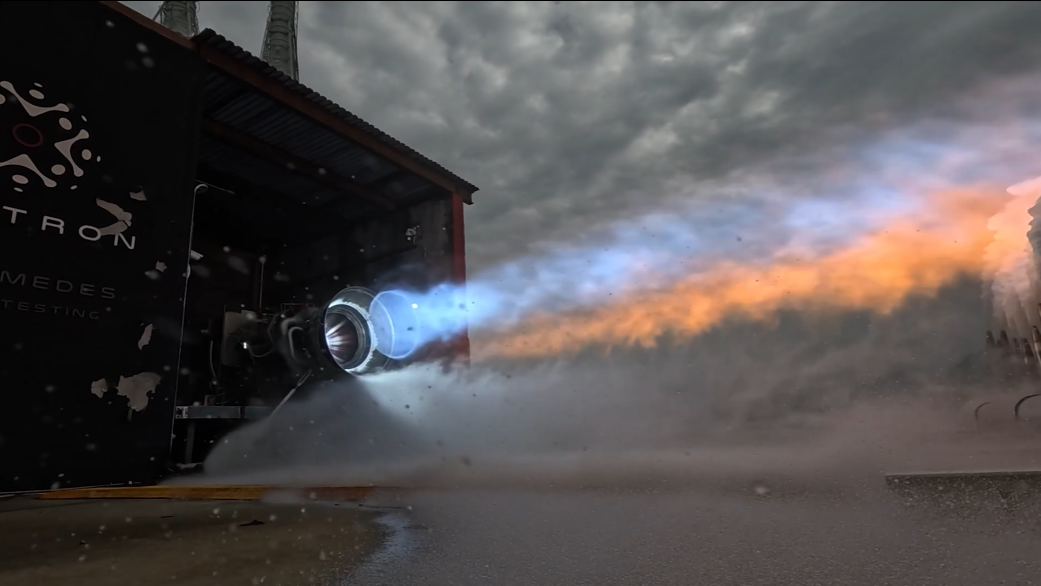
Rocket Lab completed a full-duration static fire test of the Archimedes engine, which will power the second stage of its upcoming Neutron launch vehicle. The test demonstrates progress toward the company's goal of deploying a heavy-lift rocket capable of competing with SpaceX's Falcon 9 and other commercial launch systems.
Neutron represents Rocket Lab's evolution beyond its smaller Electron rocket, which has dominated the small-lift market since 2017. The new vehicle targets a payload capacity of approximately 8,000 kilograms to low Earth orbit, a substantial jump from Electron's 300-kilogram capacity. The Archimedes engine, the centerpiece of this advancement, underwent full-duration testing to validate its performance and reliability before flight operations begin.
Static fire tests burn engines at full throttle while anchored to a test stand, allowing engineers to collect comprehensive data on engine performance, structural integrity, and system behavior under operational conditions. This test confirms the Archimedes engine can sustain the thrust and burn characteristics required for second-stage operations. Such validation steps are essential before integrating engines into flight vehicles and launching commercial missions.
Rocket Lab, founded by Peter Beck and headquartered in Long Beach, California, faces intensifying competition in the commercial launch sector. While the company maintains operational success with Electron, larger rockets like SpaceX's Falcon 9 and Blue Origin's New Glenn dominate the heavy-lift market. Neutron positions Rocket Lab to capture mid-heavy-lift missions that represent a significant market segment.
The company has not yet announced a specific launch date for Neutron's maiden flight, though industry observers expect orbital operations within the next two to three years. Each test milestone, including the Archimedes engine validation, brings that timeline closer. Manufacturing, integration, and additional testing phases remain before the vehicle reaches the launch pad.