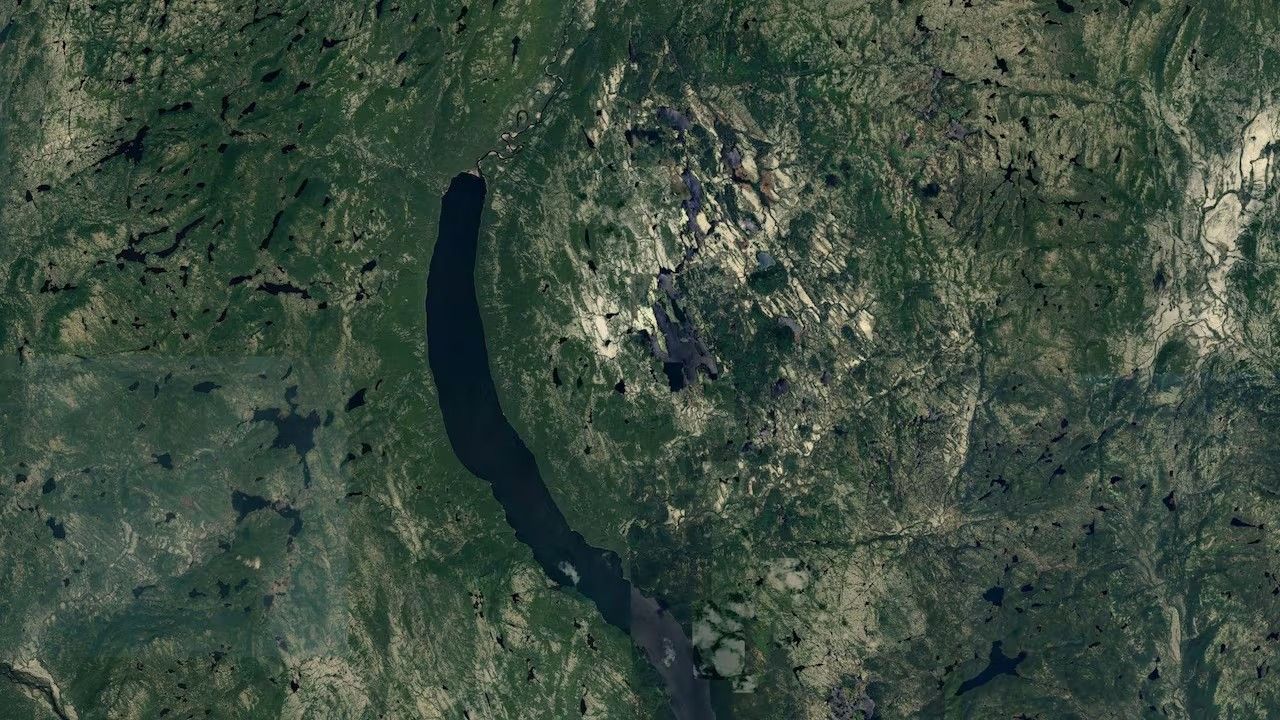
Joël Lapointe discovered one of Canada's most significant geological features by accident while planning a camping route on Google Maps. The researcher identified a large circular depression in Quebec's Côte-Nord region and suspected it might be an impact crater. Scientists have now confirmed his discovery, establishing that the 15-mile-wide pit formed roughly 390 million years ago when a meteor struck Earth.
The crater remained hidden from scientific scrutiny for centuries because it sits beneath forest canopy and sparse vegetation in a remote area of Quebec. Lapointe's serendipitous observation through satellite imagery prompted a team of researchers to mount an expedition to verify the feature's origins. Field investigations confirmed the crater's authenticity through geological evidence and structural analysis consistent with meteorite impact sites.
The timing places this impact during the Late Devonian period, an era marked by significant evolutionary changes and environmental shifts on Earth. This discovery adds to the relatively small number of confirmed impact craters in Canada. The research demonstrates how modern technology enables scientists to identify geological features that traditional ground surveys might have overlooked for generations.
Lapointe characterized the subsequent field verification as grueling work. Navigating the remote terrain to collect samples and conduct measurements required substantial physical effort and logistical planning. His team had to traverse challenging landscape conditions while documenting evidence of the ancient collision.
The crater's existence carries implications for understanding Earth's impact history and the frequency of major meteorite strikes during the Devonian period. Scientists continue analyzing samples from the site to refine their understanding of the impact's force and composition of the impacting object. The discovery underscores how technological tools like satellite imagery can revolutionize paleoscientific research by revealing features invisible to ground-level observation.
The accidental nature of this discovery highlights an ongoing challenge in planetary science. Many geological features remain unknown simply because researchers have not examined specific locations. Lapointe's