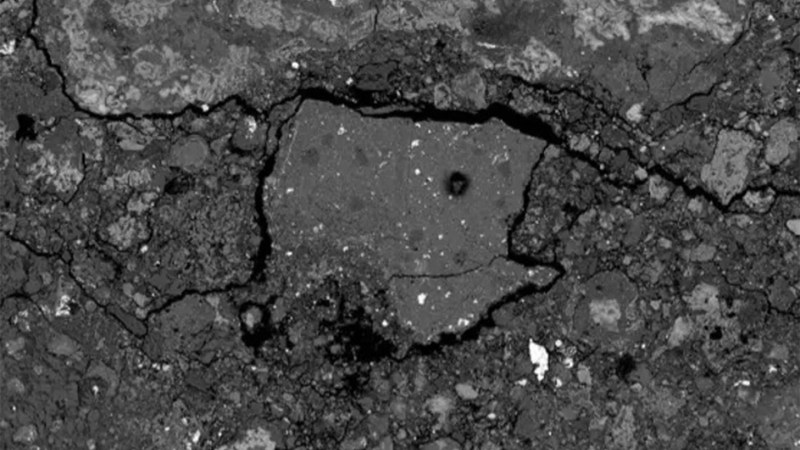
A meteorite that struck a New Jersey roof in 2024 contains amino acids, the building blocks of proteins, researchers confirmed. The space rock traveled through Earth's atmosphere before impact, preserving organic compounds that offer clues about the chemical origins of life.
The meteorite fell in the New York City area and landed on a residential roof, making it one of the most carefully documented meteorite recoveries in recent history. Scientists quickly secured the specimen, preventing terrestrial contamination that typically degrades organic material in fallen space rocks.
Analysis revealed amino acids trapped within the meteorite's structure. These compounds form the foundation of all known proteins and represent some of the most fundamental chemistry of life. Finding amino acids in meteorites supports the panspermia hypothesis, which proposes that life's chemical precursors traveled to Earth aboard celestial objects billions of years ago.
The discovery carries particular weight because meteorite samples rarely retain pristine organic chemistry. Most space rocks experience degradation during atmospheric entry or through exposure to soil bacteria and weathering after landing. The rapid recovery of this specimen meant researchers could examine amino acids in near-original condition.
The meteorite's brine-formed composition suggests it originated from a parent body that experienced liquid water, a key ingredient for prebiotic chemistry. This environment likely enabled the chemical reactions that produced amino acids before the rock detached and journeyed toward Earth.
Understanding meteorite-delivered organics helps scientists reconstruct Earth's early chemical environment. If amino acids arrived via meteorites 4 billion years ago, they would have enriched the primordial oceans and provided raw materials for the emergence of RNA and eventually life itself.
The 2024 New Jersey meteorite serves as a natural laboratory for studying prebiotic chemistry without requiring expensive space missions or lab simulations. Each meteorite recovery adds incremental knowledge about the cosmic distribution of life's building blocks and whether biology represents a universal phenomenon