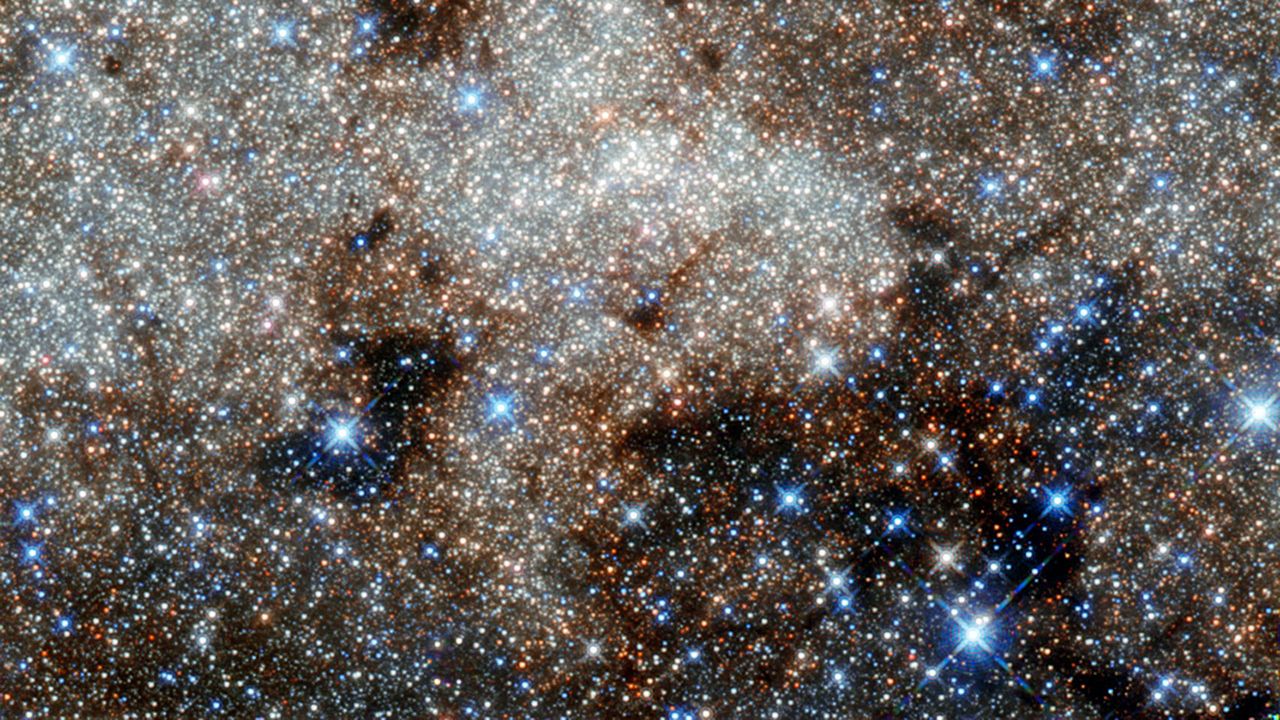
Astronomers detected erythrulose, a five-carbon sugar present in raspberries, within a vast cloud of gas and dust orbiting near the galactic center. The discovery marks the first time this specific sugar has been identified in the interstellar medium, adding to a growing catalog of organic molecules found in space.
The detection emerged from observations of the Sagittarius B2 complex, a dense molecular cloud roughly 26,000 light-years from Earth. Researchers used radio telescopes to identify the spectral signatures of erythrulose molecules among the swirling gas and dust. The presence of this naturally occurring pentose sugar supports the hypothesis that the building blocks of life distribute widely throughout the galaxy, not confined to Earth or our solar system.
Erythrulose joins dozens of other organic compounds previously identified in space, including amino acids, alcohols, and simpler sugars like glycolaldehyde. Each discovery expands understanding of how complex organic chemistry emerges in extreme environments. The Sagittarius B2 region serves as a particularly rich laboratory for such findings due to its extreme density and active chemical processes.
The significance extends beyond cataloging cosmic chemistry. These discoveries suggest that prebiotic molecules, the precursors to life itself, form readily in space through natural chemical reactions. Comets and meteorites that bombarded early Earth may have delivered such compounds to our planet, potentially seeding the chemical foundation for life's emergence. However, detection alone does not establish that these molecules reached early Earth or contributed to abiogenesis, a crucial distinction that limits overextrapolation.
The study demonstrates that advanced radio spectroscopy continues yielding insights into galactic chemistry. Researchers can now identify increasingly complex molecules by analyzing their unique radiation signatures across different wavelengths. Future observations with more sensitive instruments, including next-generation telescopes, promise to reveal even rarer organic molecules