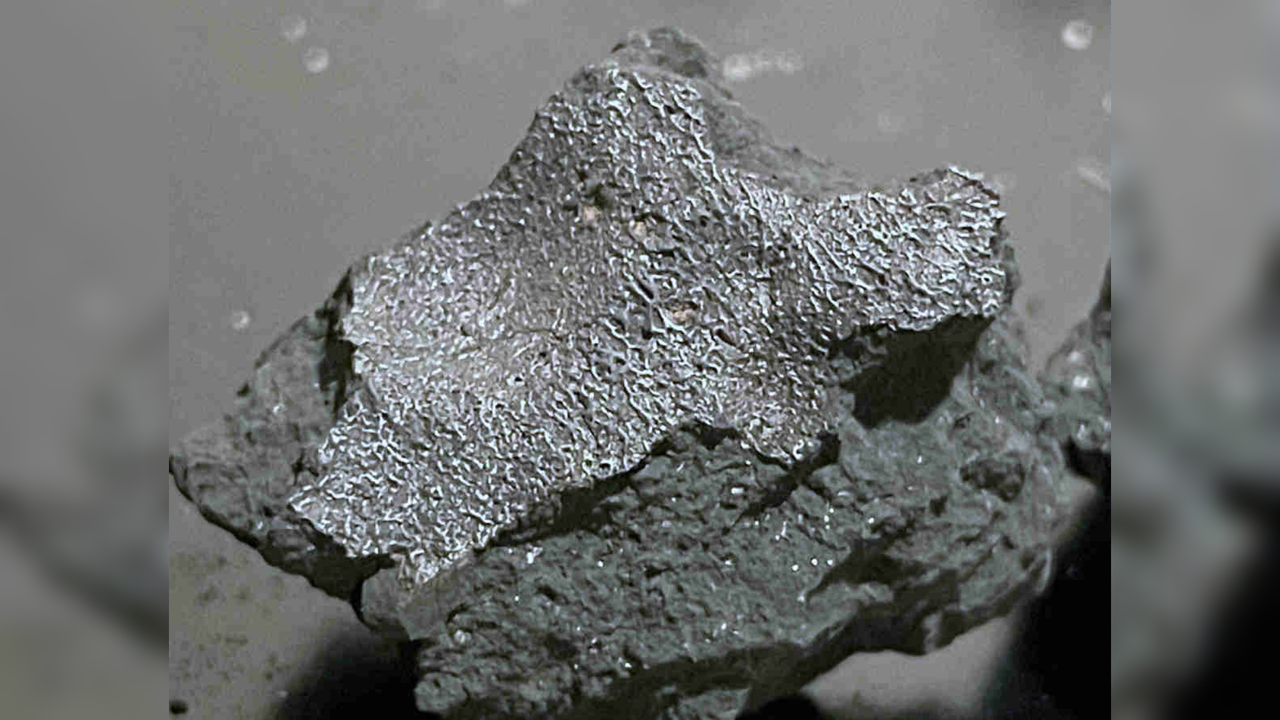
A meteorite that pierced through a New Jersey home in July 2024 has become one of the most scientifically valuable space rocks ever recovered, researchers say. The meteorite landed in Princeton Junction after falling through the roof and ceiling of a residential property, where the homeowner promptly preserved it in a freezer.
The rock belongs to the rare CM1/2 carbonaceous chondrite classification. These meteorites formed in the early solar system and contain organic compounds and water, making them windows into the chemical conditions that may have preceded life on Earth. The meteorite's rapid freezing prevented terrestrial contamination and chemical alteration that typically degrades these samples over time.
"Thanks to the homeowner's quick reaction, these are the most pristine CM1/2 meteorites we know of," researchers stated, highlighting the exceptional preservation conditions.
Carbonaceous chondrites represent some of the oldest materials in our solar system, dating back approximately 4.56 billion years. Their composition reflects the primordial nebula from which planets formed. The organic molecules trapped within these rocks could mirror compounds present on early Earth before life emerged, offering researchers direct evidence about prebiotic chemistry.
Scientists have already begun detailed analysis of the meteorite fragments. The samples will undergo examination using spectroscopy, electron microscopy, and chemical analysis to catalog their mineral composition and organic content. Researchers anticipate the meteorite will yield data about water distribution in the early solar system and the types of organic chemistry that preceded biological systems.
The recovery exemplifies how citizen participation accelerates meteorite science. Most space rocks burn up during atmospheric entry or land in inaccessible locations like oceans or deserts. The homeowner's decision to freeze the samples rather than handle them with bare hands preserved their scientific integrity. This meteorite joins other historically significant recovered falls like the Murchison meteorite in Australia and the Tagish